
Commercial applications
Restaurant & food service flooring
Polished concrete for dining rooms and seamless polymer floors for kitchens, coolers and food production areas.
Overview
Floors for the front and back of the house
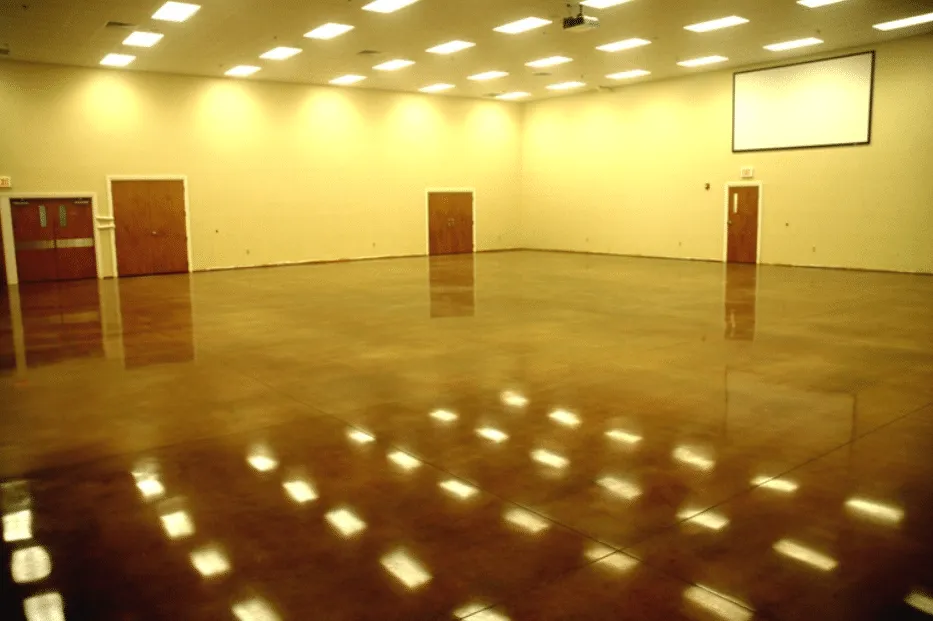
In food service, cleaning up spills and messes is part of the job. Polished concrete makes cleanup faster, and it comes in a range of colors and textures to match your decor and create the right atmosphere for guests.
In kitchens and production areas, we offer several self-leveling polymer floors, polyurethane and epoxy coatings, chosen to meet the requirements you have for the floor. Commercial kitchens and food and beverage plants face constant moisture, dramatic temperature swings, hot oils, regular high-pressure hosing and harsh chemicals and alkalis.
Application at a glance
- Dining rooms
- Polished concrete for faster cleanup, in a range of colors and textures
- Kitchens and production
- Self-leveling polymer floors, polyurethane and epoxy coatings
- Common floor needs
- Moisture, temperature swings, hot oils, high-pressure hosing and harsh chemicals
Front and back
Two different floor needs
Most restaurants need two kinds of floor: a customer-facing finish in the dining room and a seamless, washable system in the kitchen and production areas.
Dining rooms
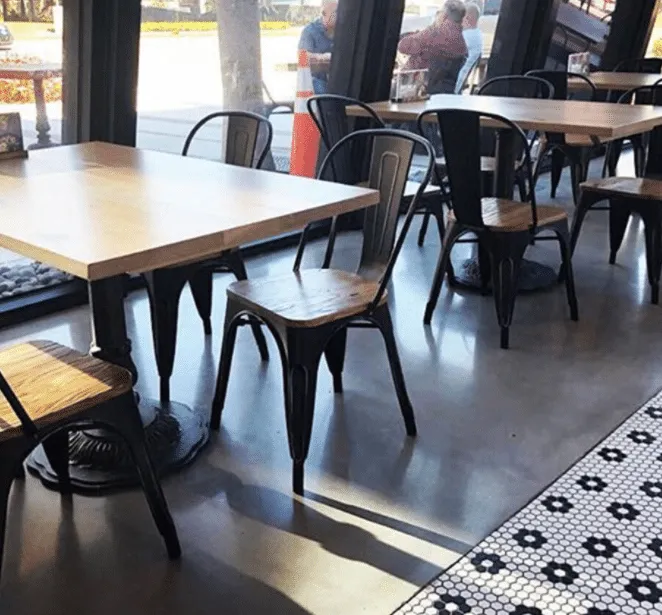
Polished concrete that is quick to clean, with colors and textures chosen to suit the room.
- Appearance that fits the decor: color, staining and a sheen from matte to high gloss
- Fast everyday cleanup with sweeping and wet mopping
- No coatings to strip and replace
- A finish that can be refreshed by re-polishing as a busy floor wears
See concrete polishing and staining.
Kitchens and production
Seamless polyurethane and epoxy systems for moisture, heat, hot oils, hosing and chemicals.
- Constant moisture and regular high-pressure hosing
- Hot oils, grease and animal fats around cooking lines
- Dramatic temperature swings, including freezers and coolers
- Harsh cleaning chemicals and alkalis
- No joints or grout lines, which is where kitchen floor problems often start
See urethane cement and commercial kitchens.
Flooring challenges
Common restaurant flooring challenges
Restaurant floors deal with more than foot traffic. These conditions most often shape the choice of system for each area.
Spills and constant cleaning
Food service floors are cleaned many times a day, so each area needs a surface suited to how it is cleaned: mopping in the dining room, washdown in the kitchen.
Grease and hot oil
Hot oils, grease and animal fats around cooking lines, combined with frequent washing, can lead to deterioration and cracking of an unsuitable floor.
Moisture and washdown
Kitchens and dish areas stay wet and are often hosed down, so drains, edges and joints need careful detailing.
Temperature swings
Cooking lines, walk-in coolers and freezers expose kitchen floors to dramatic changes in temperature.
Steady foot traffic
Guests in the dining room and staff moving quickly through the kitchen create constant traffic across both areas.
Front-to-back transitions
The doorway between dining room and kitchen is often where two different systems meet, so the transition is planned for a clean, easy-to-maintain edge.
Where it works
Food and beverage areas we floor
- Commercial kitchens
- Freezers and coolers
- Bottling facilities
- Loading docks
- Breweries
- Wineries
- Food processing
Systems
Systems for restaurants
Polished concrete, with stained color if you like, suits dining rooms because it is quick to clean. Urethane cement and epoxy systems such as epoxy quartz suit kitchens and food production areas, and metallic epoxy is used in restaurants for a distinctive look.
Compare systems
How the restaurant systems compare
Concrete polishing suits dining rooms, urethane cement and epoxy quartz suit kitchens and production areas, and metallic epoxy is a decorative option for a distinctive look.
| System | Typical restaurant areas | Why it is chosen | Keep in mind |
|---|---|---|---|
| Concrete polishing | Dining rooms and other customer-facing areas | Quick cleanup; colors, staining and a choice of sheen from matte to high gloss; no coatings to strip and replace | Uses the existing slab after grinding and repair; shine can be restored by re-polishing as the floor wears |
| Urethane cement | Kitchens, food production, bakeries and cold storage | Designed for hot oils, animal fats, alkalis, thermal shock and thermal cycling; a three-component polyurethane-concrete mortar, typically 1/8 to 3/8 inch thick | A heavy-duty, seamless system for the most demanding back-of-house areas |
| Epoxy quartz | Commercial kitchens, restrooms, break rooms and cafeterias | Layers of epoxy with colored quartz aggregate for wear and abrasion resistance; stain- and chemical-resistant; helps hide imperfections in the slab | Often compared with urethane cement for kitchen areas; the right choice depends on the conditions in each space |
| Metallic epoxy | Decorative areas such as entryways where a distinctive look is wanted | Flowing metallic color that can resemble stone, marble or water; seamless, so spills wipe up easily | The pattern varies from floor to floor because the metallic cannot be fully controlled |
The system for each area is confirmed after evaluating your floor and how the space is used. See finished floors in our photo gallery.
Planning
Choosing and preparing a restaurant floor
What decides which system fits?
The right system depends on how each area is used and cleaned, what it is exposed to, the condition of the existing concrete and the finish you want.
- Front or back of house: customer-facing appearance or kitchen and production conditions
- Cleaning method: mopping in the dining room, washdown and hosing in the kitchen
- Exposure: hot oils, fats, alkalis, moisture and temperature swings
- Drains and transitions: how the floor meets drains and changes between rooms
- Schedule: a kitchen cannot afford long shutdowns, so installation time matters
- Appearance: color, stain, sheen or a decorative metallic finish
Can existing concrete be polished or coated?
Often, yes. The condition of the existing slab decides which preparation and repair steps come first, so the floor is evaluated before a system is recommended.
- Cracks, chips and worn areas are repaired first; see concrete repair
- Old coatings are removed by grinding
- Concrete grinding removes weak surface material and contamination and gives the new floor the surface texture it needs
- Moisture in the slab is checked, because it affects which coating system is appropriate
Care
How should restaurant floors be cared for?
Polished concrete and seamless resin floors are easy to clean, but each needs regular care suited to its surface.
Polished concrete in dining areas
Regular sweeping or dust-mopping and an occasional wet mop keep polished concrete clean. Clean up spills promptly. When a busy floor loses some of its shine, it can be restored by re-polishing rather than replacing the floor.
Urethane and epoxy floors in kitchens
Seamless resin floors have no grout lines and do not need stripping or waxing. Use a neutral cleaner, avoid soaps that leave a film and citrus or vinegar cleaners that can dull the finish, and follow the coating manufacturer's care instructions.
FAQ
Restaurant flooring questions
What flooring works in restaurant dining areas?
Polished concrete is a common choice for dining rooms because it is quick to clean and comes in a range of colors and textures, including stained finishes. Metallic epoxy is used in restaurants when a distinctive, decorative look is wanted.
How are kitchen floors different from dining-room floors?
Kitchens and food production areas face constant moisture, temperature swings, hot oils, regular high-pressure hosing and harsh chemicals, so they usually need a seamless system such as urethane cement or epoxy quartz. Dining rooms put more weight on appearance and easy everyday cleaning.
Can a restaurant's existing concrete floor be reused?
Often. After an evaluation, cracks and worn areas are repaired, old coatings are ground off, and the slab is prepared for polishing or a coating. The condition of the floor decides the exact steps.
What should I ask before choosing a restaurant floor?
Ask whether the system suits the heat, moisture and chemicals in each area, how the floor will meet drains and change between rooms, how it will be cleaned, and whether the installation time fits your schedule.
Areas served
Serving homes and businesses across Southern California
- San Diego County
- Orange County
- Riverside County
- Los Angeles County
Free estimate
Ready to transform your concrete floor?
Share a few details about your space and the finish you have in mind, and we will help you choose the right system for your home or business.
- (619) 870-8308Call for a free estimate
- info@concretepolishingsolutions.proEmail us about your project
- Southern CaliforniaSan Diego, Orange, Riverside & Los Angeles counties