Concrete Polishing Solutions

Commercial & residential concrete flooring · San Diego, Orange, Riverside & Los Angeles counties info@concretepolishingsolutions.pro (619) 870-8308

Caulking & waterproofing

Exterior wall caulking & waterproofing

Leak checks, joint caulking and waterproofing that help keep water out of buildings across San Diego and the surrounding areas, for residential, commercial and industrial properties.
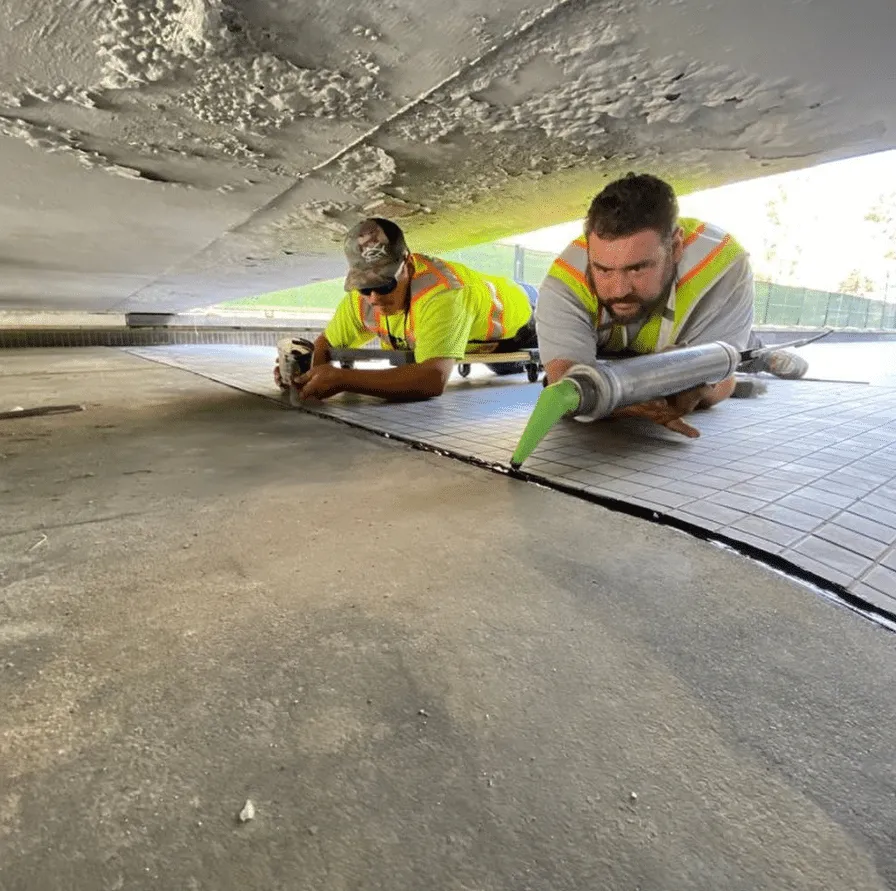
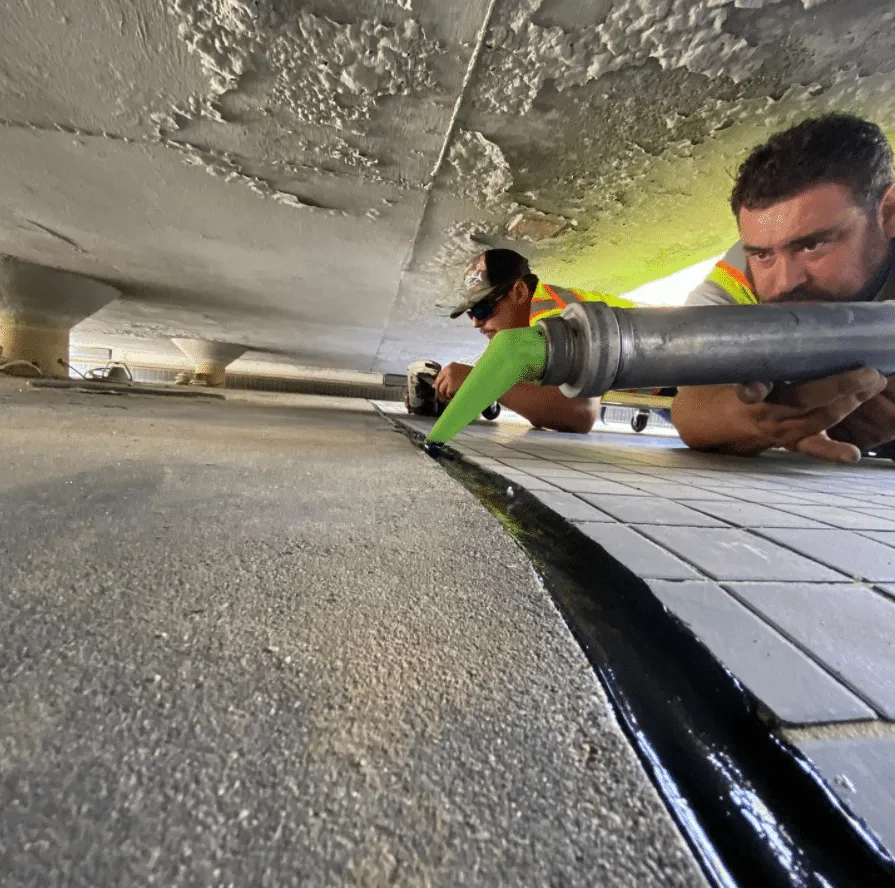
Crew members applying caulking to a concrete joint
Joint caulking
Crew member applying caulk to a concrete expansion joint

Overview

Sealed joints help keep water out of the structure

Concrete Polishing Solutions checks for leaks and caulks exterior wall joints in San Diego and the surrounding areas. Our technicians help keep water out of buildings before it causes costly damage.

Exterior wall caulking helps stop rainwater, moisture, dust, light, heat, insects and sound from getting through cracks in wall joints and into the structure. Sealants also have to handle the expansion and contraction caused by temperature changes and earthquakes, so it pays to work with people who understand the strengths and weaknesses of different sealants and caulking techniques.

We work on residential, commercial and industrial properties, sourcing the right sealant for each joint.

Choosing a service

Which joint or seal service fits?

Start with what needs sealing: a joint in concrete, a window, a wall surface, or a leak whose source is not known yet.

Caulking and waterproofing services by what needs sealing
What needs sealingServiceIn short
Control joints in concrete walls, precast and slabsControl joint caulkingThe old joint is removed completely and new backer rod installed; silicone is the usual sealant
Joints that let the structure move, such as on parking decksExpansion joint caulkingA sealant or a pre-formed joint, such as a rubber expansion joint, chosen for the joint width and movement
Exposed joints on commercial buildingsSilicone caulkingThe usual choice for replacing old caulking, with a longer life expectancy than urethane
Joints that will be painted or coatedUrethane caulkingA paintable sealant, used under elastomeric coatings
Windows whose gaskets no longer keep water outWet glazingSilicone installed wet between the window and the frame
Exterior wall surfaces above groundElastomeric wall coatingsA flexible coating that fills small gaps and helps keep water out
Leaks with an unknown source, and decks or balconiesWaterproofingLeak investigation, deck coatings and waterproofing systems, matched to where water is getting in

What we do

Exterior caulking and waterproofing services

  • Rain leak inspection

    We look for water intrusion with thermal imaging and visual inspection of exterior joints, then prepare a photo report describing the issues and a solution. If leaks are not visible, we water-test to find the leaking area.

  • Wall and window joint remedial caulking

    Most leaks from frames and walls come from deteriorated sealant. Joints are cleaned of old sealant, degreased and re-caulked with products suited to the substrate, joint width and environment.

  • Construction caulking

    We work with general contractors to seal and caulk exterior joints on new construction projects.

  • Exterior wall waterproofing

    Brick, natural stone and concrete are porous. We re-seal wall joints and apply a clear water-repellent sealer to help prevent water penetration.

Common question

What is the difference between a control joint and an expansion joint?

Both are planned joints that move, but they do different jobs, so they are sealed differently.

Control joints

A control joint is a planned line in concrete or precast where cracking from shrinkage and temperature movement is encouraged to happen. The sealant closes the joint so it can move while helping to keep water and debris out; it does not make the concrete crack-proof.

See control joint caulking.

Expansion joints

An expansion joint gives a structure’s movement somewhere to go, for example as a parking deck shifts under changing loads and temperatures. Worn or debris-filled joints restrict that movement, so they are repaired or replaced.

See expansion joint caulking.

Where joints occur

Building elements with joints

A wall joint is where building elements meet. Every exterior has many of them, and each one needs a flexible sealant that can handle movement, heat, rain and insects.

  • Wall cladding

    The outer skin of a wall that protects it, also called paneling, made from many different materials.

  • GFRC panels

    Glass fiber reinforced concrete: lightweight panels commonly used to clad exterior walls.

  • Flashing

    Thin metal sheets, usually aluminum or copper, that help keep water out of a building and keep walls dry.

  • Molding and cornices

    Molding covers gaps between exterior surfaces; cornices top a wall and help shed rainwater away from it.

  • Window trims and sills

    Trims help keep rain out of the gaps around a window; sills slope away from the wall to help keep water out of the opening.

  • Canopies

    Canopies over doors and windows meet the wall at joints that also need sealing.

Choosing a sealant

Common sealant types compared

Thermal expansion, UV exposure and compatibility with the substrate and other sealants all affect which sealant is right for a joint.

Advantages and disadvantages of common sealant types
SealantAdvantagesDisadvantages
PolyurethanesExcellent adhesion; good weatherability; paintable; good mechanical properties; chemical resistance.Whites may yellow with UV exposure; vinyl substrates need priming; limited temperature resistance; UV resistance varies by product.
SiliconesExcellent UV stability; good adhesion to many substrates; good temperature resistance; suited to glass-to-metal joints; good mold resistance.Not paintable; only silicone sticks to silicone; can attract dirt; high moisture transmission; potential for staining.
PolysulfidesGood weatherability; good adhesion; paintable; chemical resistance.May need a primer; limited high-temperature performance; low tear strength; older technology; high viscosity.
AcrylicsPaintable; low cost.Limited movement capability; poor weather resistance; not recommended for exterior use.
HybridsApply and behave like a silicone; paintable; excellent UV stability; good adhesion to many substrates.Can be harder to apply in low temperatures; can attract dirt.

How it works

Our remedial joint caulking process

  1. 01

    Remove the old sealant

    Old, cracked or delaminated sealant is removed completely so the new sealant can bond well.

  2. 02

    Clean and degrease

    The joint is cleaned with the two-rag method so no loose material, grease or dust is left to weaken adhesion.

  3. 03

    Install backer rod

    Backer rod or bond-breaking tape keeps the sealant at the manufacturer’s recommended size so it can flex as designed.

  4. 04

    Apply the sealant

    Sealant is applied to the correct joint width with an application gun.

  5. 05

    Tool the joint

    Special spatulas press and shape the sealant so it adheres and looks clean. Tooling is an essential step that is often skipped.

Why it matters

What water intrusion can do to a building

Mold and corrosion

Holes and cracks in exterior walls let moisture build up in the joints, where mold can grow over time. Water that reaches metal can also cause rust and corrosion of structural beams, which is expensive to fix and leaves rust stains inside and out.

Electrical hazards and costly repairs

Water leaks can travel along pipes and reach electrical wiring, creating a safety hazard. Water damage is one of the most common reasons for costly building repairs, and leaks that seem minor can do serious damage if they are ignored.

Building types

Properties we caulk and waterproof

Warranty terms for caulking and waterproofing work are set out in your Statement of Work. See Guarantee / Warranty for general terms and exclusions.

FAQ

Caulking and waterproofing questions

Why is exterior caulking important?

Exterior caulking helps stop water and dust from getting into the joints around windows, doors, trim and flashing, and helps keep heat and sound from passing through. It also lets joints move as a building settles and as the exterior heats and cools.

How do you choose the right sealant?

We consider thermal expansion, UV exposure and compatibility with the substrate and any existing sealants. The joint width and the overall environment also matter.

What causes most leaks around windows and walls?

Typically, deteriorated sealant in window or wall joints. Those joints need to be cleaned of old sealant, degreased and re-caulked with the right product.

Areas served

Serving homes and businesses across Southern California

  • San Diego County
  • Orange County
  • Riverside County
  • Los Angeles County

Free estimate

Ready to transform your concrete floor?

Share a few details about your space and the finish you have in mind, and we will help you choose the right system for your home or business.

Free estimate

Request your free estimate

Prefer to talk? Call (619) 870-8308

This field is for validation purposes and should be left unchanged.
Name(Required)
Call (619) 870-8308Call Now (619) 870-8308Get a Free EstimateFree Estimate