
Epoxy flooring
Epoxy chip flooring in San Diego
Layered epoxy with vinyl flakes: chemical-resistant, easy to clean and made for busy floors.
Chip flooring systems
A textured, terrazzo-like floor for busy spaces
Epoxy chip flooring systems are built from multiple layers of 100% solids epoxy, vinyl flakes and a protective topcoat. They are chemical-resistant and very easy to keep clean in commercial spaces.
The finish is best for areas with heavy foot traffic or light vehicle traffic, and its terrazzo-like look is attractive in both homes and businesses. Chip size, color and density can be varied to suit the look you want.
Service at a glance
- Best for
- Areas with heavy foot traffic or light vehicle traffic
- Finish
- Textured, terrazzo-like look; chip size, color and density can be varied
- Good to know
- Chemical-resistant and very easy to keep clean
- Service family
- Epoxy Flooring
What the flakes do
What the flakes add to an epoxy floor
The vinyl flakes are what give a chip floor its look. Broadcast into the epoxy and sealed under a topcoat, they add color and pattern, and their size, color and density can be varied.
Color and pattern
Multicolored flakes create a speckled, terrazzo-like finish, from subtle blends to bold contrast.
Coverage you choose
Chip size, color and density can be varied, from a light scatter of flakes to a floor fully covered in chips.
Hides imperfections
The flake pattern helps hide imperfections in the slab, much like a quartz finish.
Compared with tile
Epoxy chip flooring vs. vinyl composite tile
Chip systems are a strong option for spaces that currently use vinyl composite tile (VCT).
| Vinyl composite tile | Epoxy chip flooring | |
|---|---|---|
| Routine care | Needs regular stripping and waxing. | No stripping and waxing; reduces the time and cost of upkeep. |
| Moisture | Vulnerable to moisture vapor intrusion. | A seamless surface without grout lines. |
| Look | Individual tiles with seams. | Seamless, with a terrazzo-like flake finish. |
Where it works
Good uses for epoxy chip flooring
- Recreational facilities
- Shop floors
- Retail showrooms
- Restaurants
- Grocery stores
- Schools
- Healthcare facilities
- Garages
Compare finishes
Chip, quartz, solid color or polyaspartic?
Epoxy chip is the flake option in the epoxy family, chosen for a decorative, terrazzo-like look on floors with heavy foot traffic or light vehicle traffic. Quartz, solid epoxy, polyaspartic and metallic epoxy answer different needs.
| Option | How it differs from a chip floor | Typically chosen for |
|---|---|---|
| Epoxy quartz | Colored quartz aggregate instead of vinyl flakes, for wear and abrasion resistance and a textured surface | Kitchens, restrooms, locker rooms, stairs and exterior walkways |
| Solid epoxy | A single color, smooth or textured, without decorative flakes | Warehouses, shops, labs and areas that need striping or color coding |
| Polyaspartic with chips | The same chip look built with a polyaspartic coating, which installs faster than epoxy and generally costs more | Garages and showrooms where time matters |
| Metallic epoxy | Swirling metallic pigments instead of flakes, for a decorative floor whose pattern varies from floor to floor | Showrooms, lobbies, restaurants and homes |
Compare every system on the epoxy flooring overview, or see polyurea polyaspartic for faster-installing chip floors.
Before and during installation
From bare slab to finished chip floor
A chip floor is built in layers on prepared concrete. Preparation depends on the slab: its condition, any old coating or sealer, cracks, contamination and moisture.
Before the first coat
- Existing coatings or sealers are removed so the epoxy can bond
- Cracks and damaged areas are repaired
- The surface is prepared mechanically, with the method chosen to suit the slab
- The slab is checked for moisture before the system is confirmed
See concrete grinding.
Building the chip floor
A base coat of epoxy goes down, and vinyl flakes are broadcast into it while it is wet. Loose flakes are removed once it sets, and a topcoat holds the chips in place and gives the floor its final finish.
How much texture the finished floor has depends on the topcoat. After installation, see the floor care guide.
Our work
Flake-finish floors
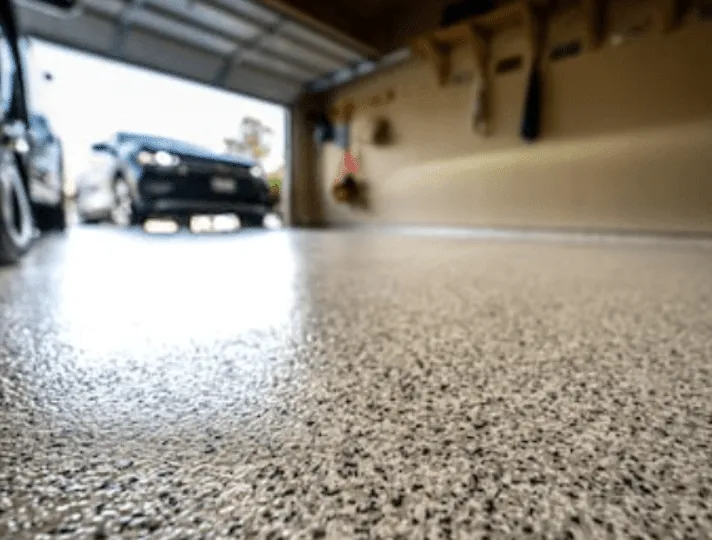
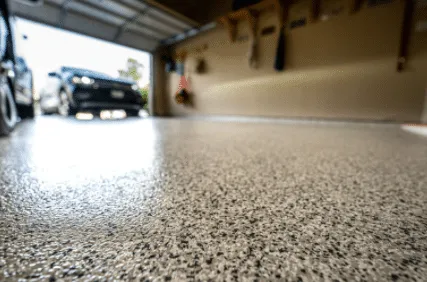
 Open larger photo: Close-up of a flake-finish garage floor
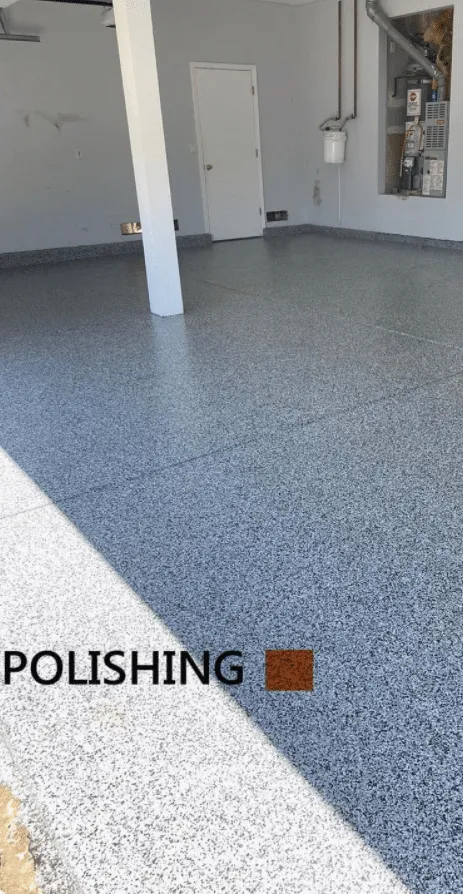
 Open larger photo: Close-up of a gray flake-finish floor
 Open larger photo: Flake-finish floor in a break room
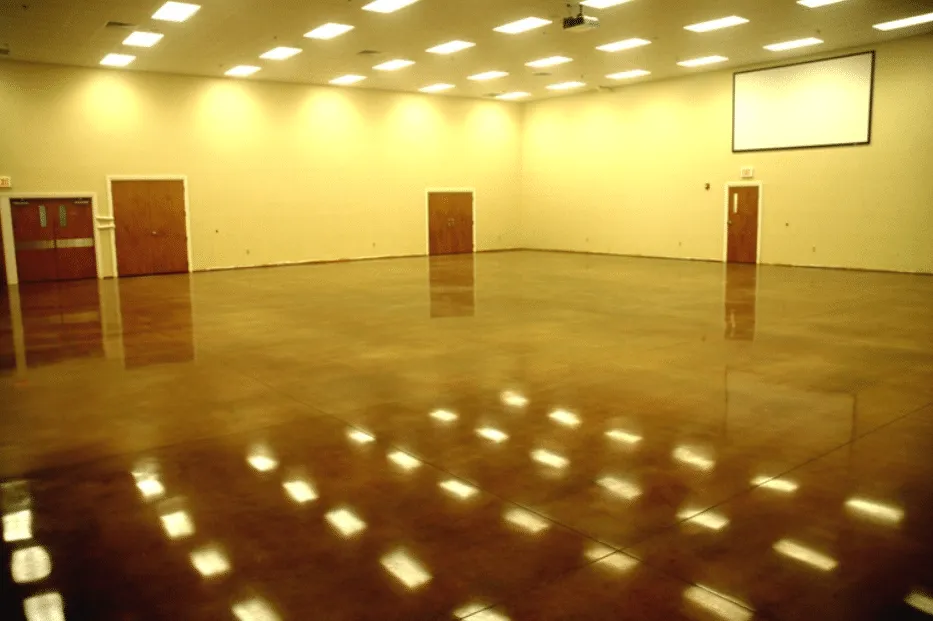
 Open larger photo: Flake-finish floor in an empty room
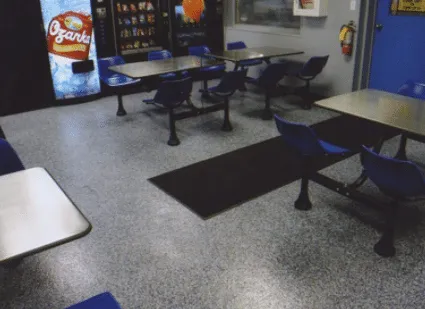
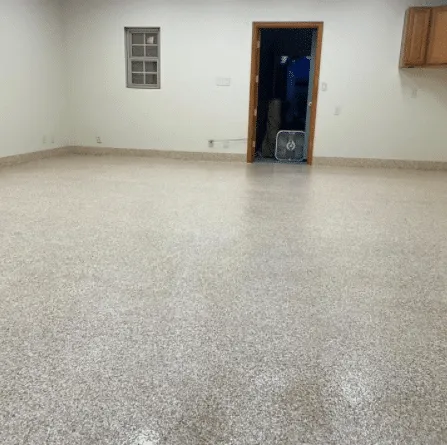
Photos from Concrete Polishing Solutions projects. Select a photo to view it larger.
View the photo galleryFAQ
Epoxy chip questions
Can I choose the chip colors and size?
Yes. Chip size, color and density can be varied, so the floor can be matched to a home, a brand or the rest of a space.
Is a chip floor suitable for vehicle traffic?
Chip floors suit areas with heavy foot traffic or light vehicle traffic, such as garages and showrooms. For heavier vehicle or forklift traffic, systems such as solid epoxy, urethane cement or polished concrete are considered.
Can a chip floor be built with polyaspartic instead of epoxy?
Yes. Polyaspartic is often paired with chip finishes. It installs faster than epoxy and generally costs more. See polyurea polyaspartic.
Where are chip floors used in commercial buildings?
Chip floors are used in schools, restaurants, grocery stores, healthcare facilities, retail showrooms and recreational facilities, where a seamless, easy-to-clean floor replaces tile that needs stripping and waxing. See school flooring.
Related
Related services
- Polyurea PolyasparticA fast-installing coating often paired with chip finishes in garages and showrooms.
- Epoxy Quartz FlooringEpoxy mixed with colored quartz aggregate for wear and abrasion resistance.
- Solid Epoxy FlooringHigh-gloss or aggregate-textured epoxy for hangars, shops, warehouses and retail.
- Garage FloorsFlake and epoxy garage floors for homes.
Areas served
Serving homes and businesses across Southern California
- San Diego County
- Orange County
- Riverside County
- Los Angeles County
Free estimate
Ready to transform your concrete floor?
Share a few details about your space and the finish you have in mind, and we will help you choose the right system for your home or business.
- (619) 870-8308Call for a free estimate
- info@concretepolishingsolutions.proEmail us about your project
- Southern CaliforniaSan Diego, Orange, Riverside & Los Angeles counties