
Commercial applications
Factory concrete flooring
Cost-effective, practical concrete floors for factories, built to handle heavy machinery and steady foot traffic.
Overview
Practical floors for production work
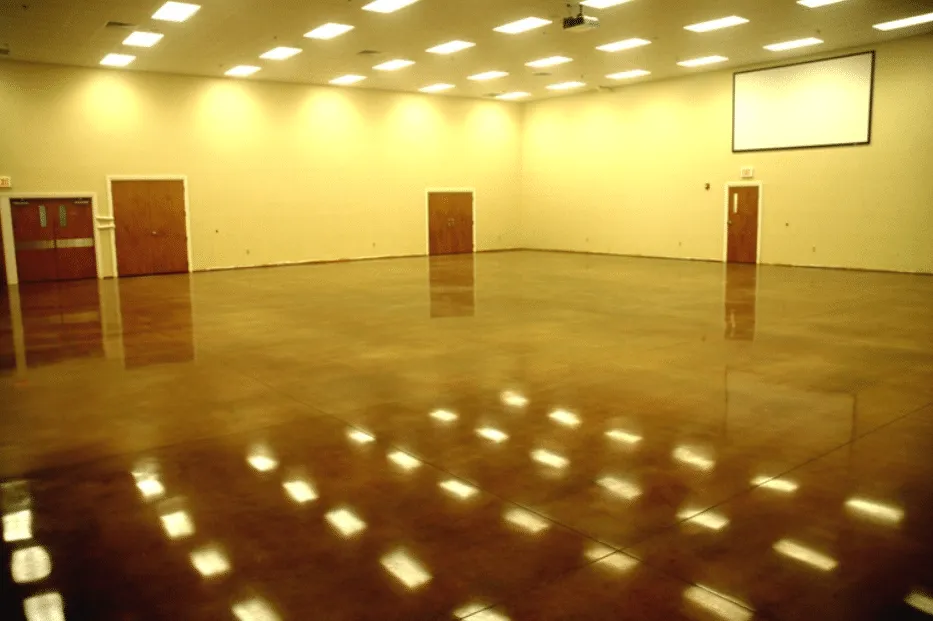
For industrial environments such as factories, concrete floor installations are both cost-effective and practical. Concrete floors are attractive and durable, and they handle heavy machinery and frequent foot traffic better than most other types of flooring.
A well-finished floor makes the factory a more pleasant place for production work and other activities. Concrete polishing suits high-traffic areas with forklifts and heavy equipment, and it avoids the cost of coatings that need frequent replacement in those areas.
Application at a glance
- Common floor needs
- Heavy machinery, oil, grease and chemicals, and wear
- Best for
- High-traffic areas with forklifts and heavy equipment
- Relevant systems
- Concrete polishing, solid epoxy, urethane cement and concrete repair
Flooring needs
What factory floors face
Heavy machinery
Equipment loads and forklift traffic across the floor every day.
Oil, grease and chemicals
Production processes that can stain and wear bare concrete.
Wear and damage
Cracks, trenches and surface damage that slow work down.
Problems and fixes
Common factory floor problems and how they are fixed
A damaged factory floor can usually be put right without replacing the slab. These are common problems and the usual way each one is handled; the approach is confirmed after looking at the floor.
| Problem | What is usually behind it | Typical fix |
|---|---|---|
| Cracks and trenches | Heavy loads, machinery and age | Repair the damaged areas so the floor is smooth and continuous before any finish goes down |
| Dusty, worn bare concrete | Traffic wearing away the surface of unfinished concrete | Grind, densify and polish; a polished floor does not collect dust easily |
| Oil, grease and chemical stains | Production processes and leaks from equipment | Grinding and polishing can address many surface stains; a coating protects areas with ongoing exposure |
| Peeling or worn-through coating | A coating that cannot keep up with the traffic in that area | Grind off the old coating, repair the slab, then recoat or polish |
| Uneven or spalled surface | Wear, impacts and surface damage | Grinding to restore an even surface, with repair or resurfacing where the damage goes deeper |
| Patchy, mismatched color | Repairs and staining in different parts of the floor | Grinding and polishing gives a more even appearance, and stain can add color |
Systems
Systems for factories
Concrete polishing is a cost-effective choice for factory areas with forklifts and heavy equipment, because it avoids coatings that need frequent replacement. Solid epoxy and urethane cement are coating options for production areas, and concrete repair addresses cracks, trenches and surface damage.
Choosing a finish
Matching the finish to each production area
A factory floor can combine the two approaches: polished concrete where traffic is heaviest, and a coating where processes put oil, chemicals or water on the floor.
Where polishing fits
- Forklift routes and main aisles
- Open production floor and assembly areas
- Storage and staging areas
- Areas where a coating would wear through quickly
Polishing densifies the existing concrete instead of adding a layer that can wear away. See concrete polishing.
Where a coating fits
- Process areas where oil, grease or chemicals reach the floor
- Wash-down and wet areas
- Areas that need color coding or line striping
- Areas with heat, hot liquids or temperature swings, where urethane cement is designed to cope
See solid epoxy and urethane cement.
Planning the work
Keeping production running during floor work
Factory floor work is planned with production in mind. Where the layout and system allow, it may follow a sequence like this.
- 01
Map the areas
The floor is evaluated area by area: machinery, traffic routes, process areas and damage that needs repair.
- 02
Agree the sequence
Where it suits the layout and the system, work may be phased so areas are taken out of service in a planned order.
- 03
Repair and prepare
Cracks and damaged areas are repaired, old coatings are ground off and the surface is prepared for the chosen finish.
- 04
Return each area to work
Each area goes back into service when its finish is ready. Return-to-service times depend on the system and site conditions.
FAQ
Factory flooring questions
What is the most cost-effective floor for a factory?
For high-traffic areas, polished concrete is usually the most cost-effective option over time: there is no coating to wear through and replace, and the shine can be restored by re-polishing. Coatings make sense where production processes call for them.
Can a cracked factory floor be polished?
Often, yes. Cracks and damaged areas are repaired first, and the floor is then ground and polished. Whether polishing suits the slab is confirmed after an inspection; badly damaged concrete may need resurfacing instead. See concrete resurfacing.
Does polished concrete reduce dust on a factory floor?
Polishing grinds and densifies the surface, and a polished floor does not collect dust easily. That makes it easier to keep clean than worn, unfinished concrete.
How is floor work planned around production?
The work is planned with you to interfere with production as little as possible. Phasing the work area by area may be considered, depending on the areas involved, the system and site conditions. We give you a schedule for your project with your estimate.
Areas served
Serving homes and businesses across Southern California
- San Diego County
- Orange County
- Riverside County
- Los Angeles County
Free estimate
Ready to transform your concrete floor?
Share a few details about your space and the finish you have in mind, and we will help you choose the right system for your home or business.
- (619) 870-8308Call for a free estimate
- info@concretepolishingsolutions.proEmail us about your project
- Southern CaliforniaSan Diego, Orange, Riverside & Los Angeles counties