Concrete polishing
Concrete repair in San Diego
Repairs for broken, worn, cracked, chipped or flaking concrete, from interior floors to pool decks, patios and driveways.
Overview
Long-term fixes for damaged concrete
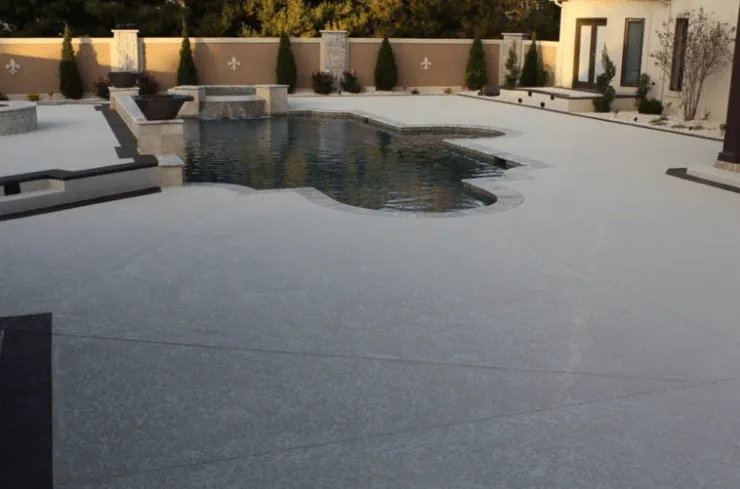
When a concrete surface is broken, worn, cracked, chipped or flaking, a proper repair is the way to a long-term result. We work on residential, commercial and industrial concrete, inside and out, from a patio or pool deck to a driveway or interior floor.
Knowing what caused the damage makes it easier to choose an appropriate repair. A contractor should look at the surface first to see whether the damage is only on the surface or goes deeper into the slab.
Service at a glance
- Best for
- Broken, worn, cracked, chipped or flaking concrete
- Common projects
- Pool decks, patios, driveways, garage floors and interior floors
- First step
- Checking whether the damage is only on the surface or goes deeper into the slab
- Service family
- Concrete Polishing
Causes
What damages concrete
Age
However long concrete lasts, it can become brittle and weak over time.
Temperature and weather
Surfaces exposed to rain, extreme heat or freeze-thaw cycles are more likely to break down.
Faulty construction
Poor construction methods, such as improper subgrade compaction, can cause cracking or an uneven surface.
Soil movement
Erosion and movement of the soil under a slab can cause cracks.
Heavy use
Constant foot or vehicle traffic takes a toll on the surface.
How repairs are made
Repairing cracks, holes and damaged areas
Repairs are matched to the damage. Cracks and holes are opened up and filled; larger damaged areas are rebuilt or covered as part of resurfacing.
Cracks, holes and joint gaps
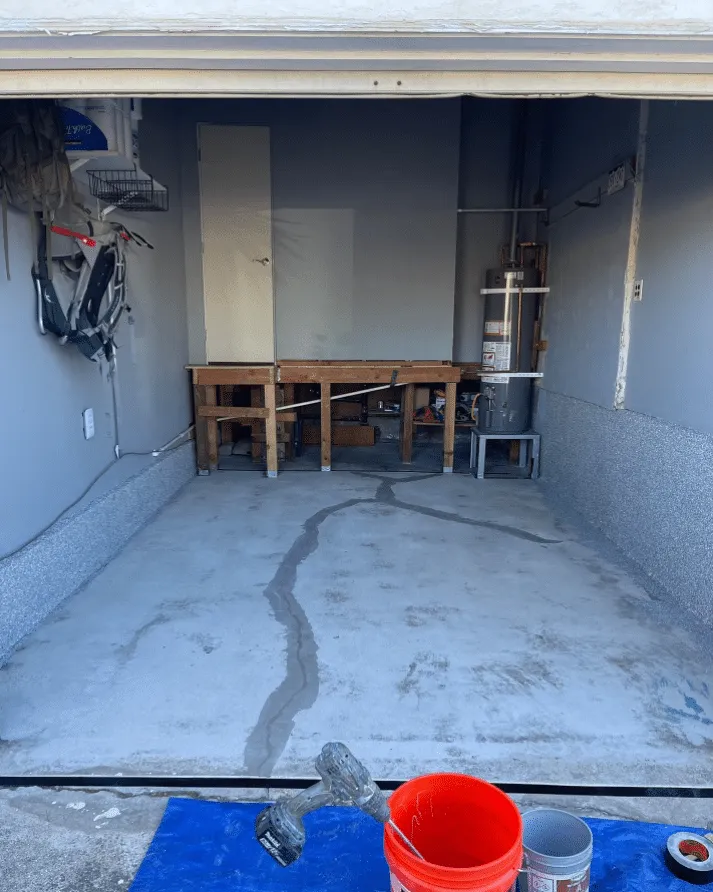
Cracks are ground out and cleaned to open them up, then repaired with an epoxy crack-repair or patching material, so the surface is smooth and continuous before it is refinished.
Repairs and patches can show through a polished or stained finish, which is worth talking through before choosing one.
Spalled, flaking or uneven areas
Loose and flaking material is removed before an area is repaired. Where damage is spread across the surface, resurfacing can cover it with a new layer, and a thin self-leveling layer can fix cracks, pits and splits that patching compounds cannot handle.
See self leveling.
Repair options
Refinishing or resurfacing
The type of damage decides the method.
Refinishing
Many cosmetic problems can be fixed by refinishing the surface with durable, decorative sealers or coatings that are easy to clean. Acid or water-based stains improve the look in a wide range of colors and patterns.
See acid staining and concrete sealing.
Resurfacing
More severe damage calls for resurfacing. It covers cracks, spalled concrete and flaking, and can refresh surfaces such as stamped concrete, leaving a strong, attractive surface.
See concrete resurfacing.
Where to start
Which service does the concrete need?
Different problems start with different services. Many projects combine them: repair first, then a new finish.
| What you see | Usually starts with | Then |
|---|---|---|
| Cracks, chips, holes or damaged edges | Concrete repair | Polishing, a coating, an overlay or resurfacing |
| An old coating, adhesive or residue | Concrete grinding | The new finish or system |
| A worn, pitted or rough surface over a sound base | Resurfacing | Sealing, where the finish calls for it |
| Sound concrete you want to look different | A concrete overlay or staining | Sealing |
| Uneven or low areas indoors | Self-leveling | A finish or a new floor covering |
| Sound but dull or discolored concrete | Refinishing: staining, sealing or polishing | Regular care |
| Cracks from movement, or damage that may be structural | An evaluation before any finish is planned | Depends on the evaluation |
Scope
What concrete repair covers, and what it does not
The repairs on this page are surface and flooring-related: fixing defects so concrete can be refinished, coated or used again. They are not structural engineering.
Surface and flooring repairs
- Cracks, chips, holes and spalled areas
- Damaged edges and joint gaps
- Flaking and worn surfaces
- Repairs that prepare concrete for polishing, coating, an overlay or resurfacing
When to look further
Cracks caused by soil movement or settling, and damage that may be structural, should be evaluated by the appropriate professional before surface repairs or a new finish are planned. A surface repair is not a fix for a structural problem.
Where we repair
Common repair projects
FAQ
Concrete repair questions
How do I fix my city sidewalk?
Call our team and we will help you create a plan that fits your needs.
Should damaged concrete be repaired or resurfaced?
It depends on the damage. Cosmetic problems can often be refinished with sealers, coatings or stains, while cracks, spalling and flaking usually need resurfacing. An inspection shows whether the damage goes into the slab.
Related
Related services
Areas served
Serving homes and businesses across Southern California
- San Diego County
- Orange County
- Riverside County
- Los Angeles County
Free estimate
Ready to transform your concrete floor?
Share a few details about your space and the finish you have in mind, and we will help you choose the right system for your home or business.
- (619) 870-8308Call for a free estimate
- info@concretepolishingsolutions.proEmail us about your project
- Southern CaliforniaSan Diego, Orange, Riverside & Los Angeles counties