
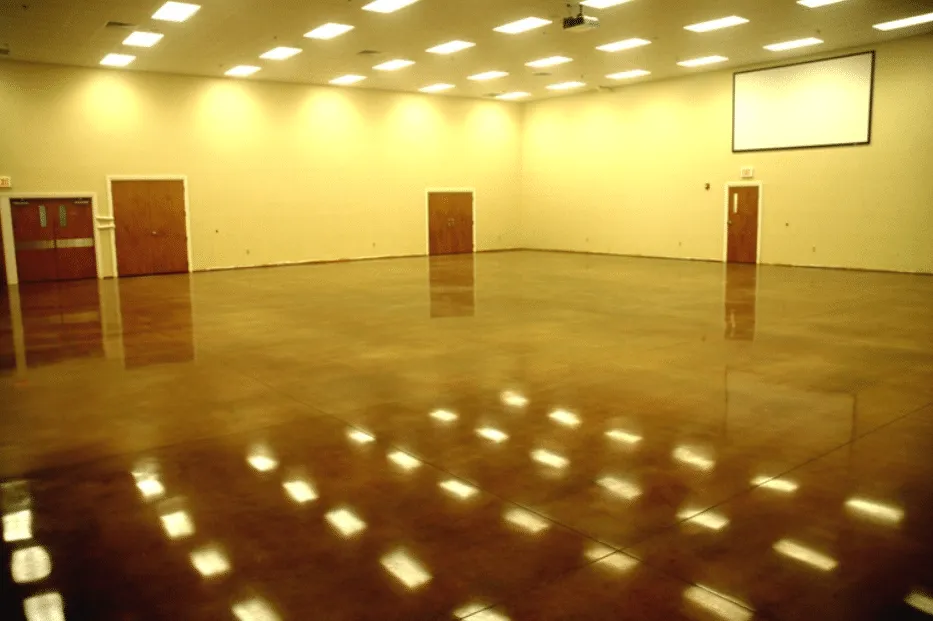
Epoxy flooring
Polyurea polyaspartic coatings in San Diego
A stain-resistant floor coating that installs faster than epoxy, often paired with chip finishes in garages and showrooms.
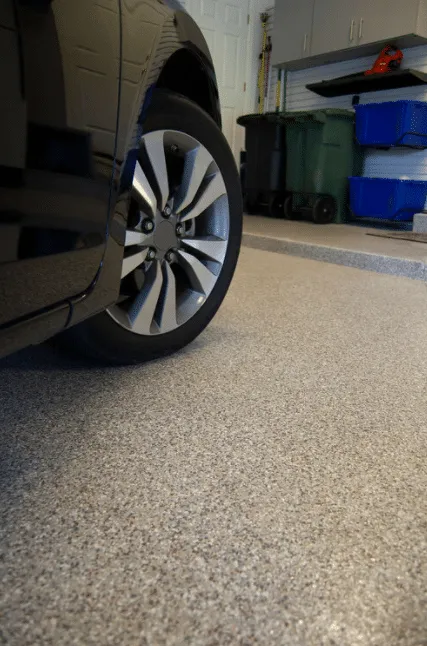
Fast-track coatings
A long-lasting, stain-resistant coating
For homes and businesses that want results quickly, polyurea polyaspartic is a floor coating option to consider. It can be installed faster than epoxy, and it gives chip floors a more finished, upscale look.
Polyaspartic coatings can be applied across a wide range of temperatures and on any type of concrete surface. Because the coating is flexible, it can bridge small gaps and keep the surface smooth and consistent. It resists chemicals used in automotive and industrial settings, and there are many decorative options to match your ideas.
Ask us about timing for your project. Installation and return-to-use times depend on the product and the conditions on site.
Service at a glance
- Best for
- Homes and businesses that want results quickly
- Common uses
- Garage floors, driveways, retail stores, auto showrooms
- Good to know
- Installs faster than epoxy; return-to-use times depend on the product and site conditions
- Service family
- Epoxy Flooring
Compare systems
Polyaspartic or solid epoxy?
Polyaspartic installs faster than epoxy and is flexible enough to bridge small gaps. Solid epoxy generally costs less and offers a wide range of thicknesses. The right choice depends on timing, budget, sunlight and the look you want.
| Factor | Polyurea polyaspartic | Solid epoxy |
|---|---|---|
| Installation | Installs faster than epoxy; return-to-use times depend on the product and site conditions | Takes longer to install than polyaspartic |
| Strengths | Impact absorption, abrasion resistance and resistance to chemicals used in automotive and industrial settings; flexible enough to bridge small gaps | A hard, abrasion-resistant surface; strong adhesion makes epoxy a good choice for refinishing concrete |
| Sunlight | UV stability, which matters on surfaces in the sun | Epoxy can turn yellow in sunlight, so it is mainly used indoors |
| Finishes | Often paired with chip finishes, giving them a more finished, upscale look | One color, high-gloss or textured with aggregate; striping and color coding |
| Cost | Generally higher | Generally lower |
| Typical uses | Garages, driveways, retail stores, auto showrooms, sports facilities and warehouses | Garages, warehouses, shops, labs, showrooms and offices |
See solid epoxy flooring, or compare coatings for a home garage on garage floors.
Where it works
Good uses for polyaspartic coatings
When it fits
Where polyaspartic makes sense
Polyaspartic is most worth considering when time matters, when a chip finish is planned, or when the surface sees sunlight.
Tight timelines
For homes and businesses that want results quickly, a coating that installs faster than epoxy shortens the job. Ask about timing for your floor.
Chip floors
Paired with chip finishes, polyaspartic gives the floor a more finished, upscale look in garages and showrooms.
Garages and driveways
Garages and driveways are among its main uses, and its UV stability matters where a surface gets sun.
Before coating
Preparing the concrete for polyaspartic
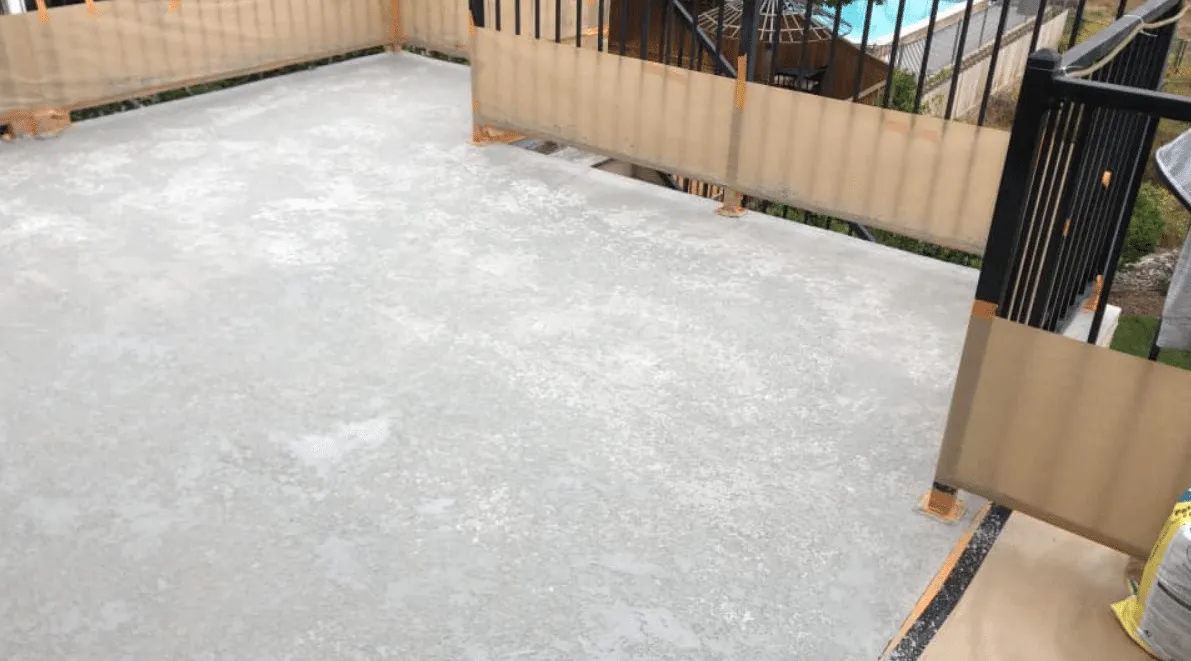
A polyaspartic coating is only as good as the surface under it. Preparation depends on the slab: its condition, any existing coating or overlay, cracks, contamination and moisture.
Getting the surface ready
- The floor is cleaned, and any existing coating or overlay is removed
- The surface is ground as needed so the coating can bond; how much depends on the concrete
- Oil stains and other contamination are dealt with before coating
- Moisture and the overall condition of the slab are checked before the system is confirmed
Small gaps and larger cracks
Because polyaspartic is flexible, it can bridge small gaps and keep the surface smooth and consistent. Larger cracks and damaged areas are repaired before coating, so the new surface is not simply hiding a problem in the slab.
See concrete repair.
Our work
Coated garage and flake floors
 Open larger photo: Flake-finish garage floor with parked cars
 Open larger photo: Collage of a flake-finish floor in a finished interior
 Open larger photo: Light flake-finish patio deck
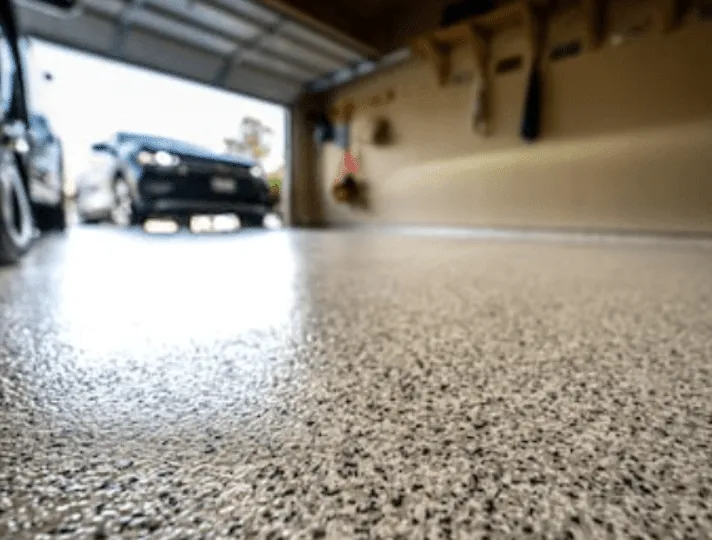
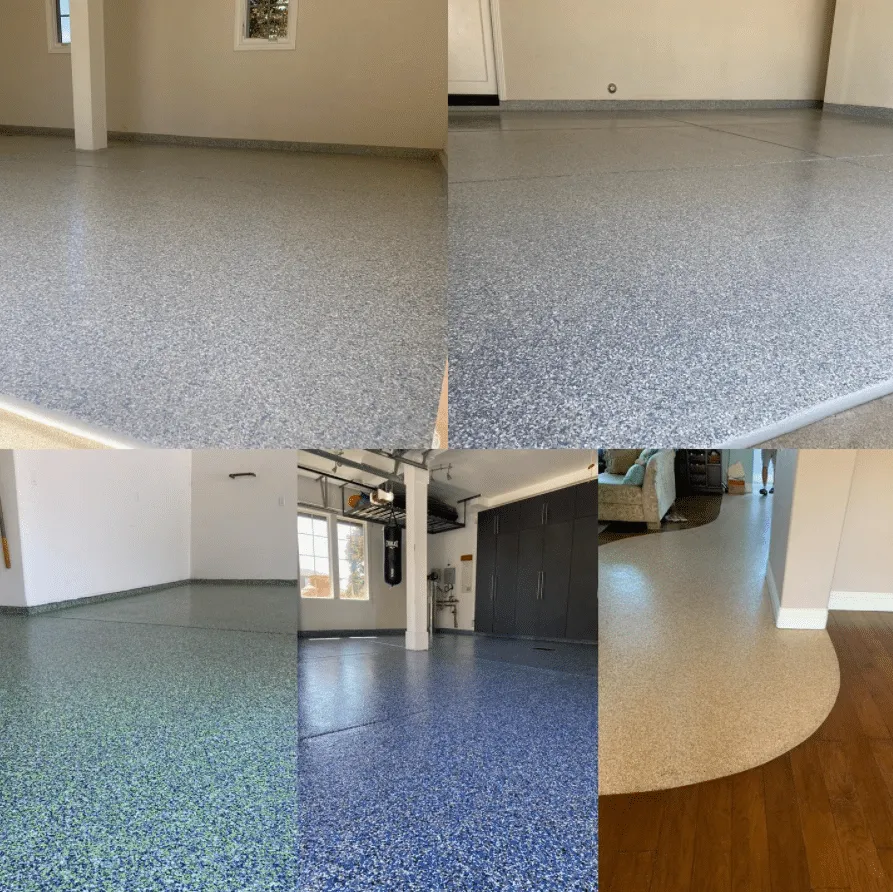
Photos from Concrete Polishing Solutions projects. Select a photo to view it larger.
View the photo galleryFAQ
Polyaspartic coating questions
Is polyaspartic the same as polyurea?
Polyaspartic coatings belong to the polyurea family of coatings, which is why the system is often called polyurea polyaspartic.
Polyaspartic or epoxy for a garage floor?
Both are resinous coatings that are simple to clean and protect against stains, chemicals, grease and wear. Polyaspartic installs faster and lists impact absorption and UV stability among its strengths; epoxy generally costs less and comes in a wider range of thicknesses. See garage floors.
How soon can a polyaspartic floor be used?
It installs faster than epoxy, but return-to-use times depend on the product and the conditions on site. We confirm timing for your floor with your estimate.
Can polyaspartic be used on a driveway?
Driveways are among its uses, and UV stability is one of its strengths on surfaces exposed to sun. Whether it suits a particular driveway depends on the condition of the concrete. See driveways.
How do you care for a polyaspartic floor?
Sweep or dust-mop regularly so grit does not scratch the surface, then clean with a diluted, neutral cleaner. Avoid soaps that leave a film, and citrus or vinegar cleaners. See the floor care guide.
Related
Related services
- Epoxy Chip FlooringLayered epoxy with vinyl flakes for a decorative, chemical-resistant finish that is easy to clean.
- Solid Epoxy FlooringHigh-gloss or aggregate-textured epoxy for hangars, shops, warehouses and retail.
- Metallic Epoxy FlooringClear epoxy with metallic pigments for a decorative finish with flowing color and movement.
- Garage FloorsCoated garage floors for homes.
Areas served
Serving homes and businesses across Southern California
- San Diego County
- Orange County
- Riverside County
- Los Angeles County
Free estimate
Ready to transform your concrete floor?
Share a few details about your space and the finish you have in mind, and we will help you choose the right system for your home or business.
- (619) 870-8308Call for a free estimate
- info@concretepolishingsolutions.proEmail us about your project
- Southern CaliforniaSan Diego, Orange, Riverside & Los Angeles counties