
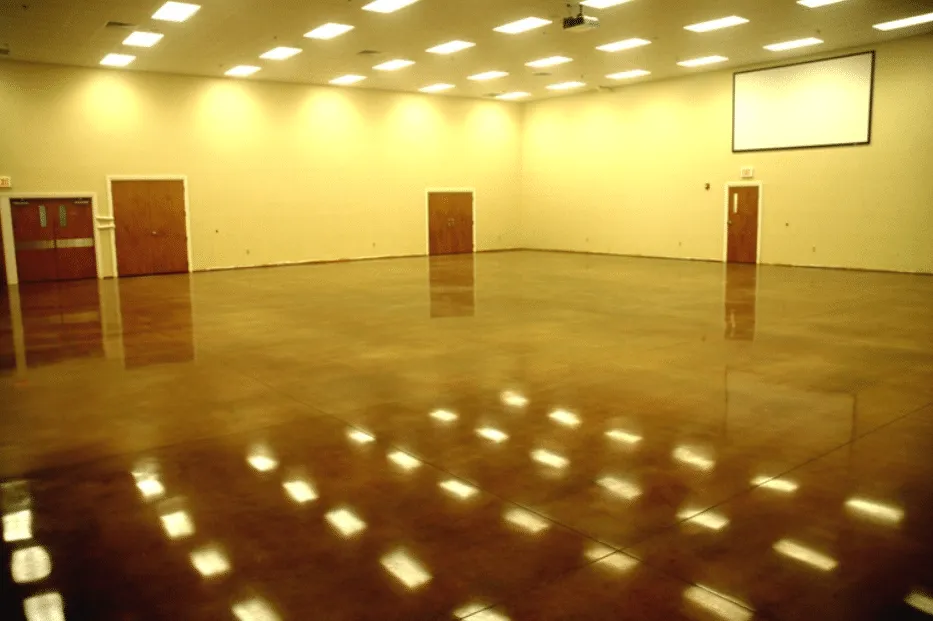
Commercial applications
Industrial flooring
High-quality, long-lasting and moisture-resistant floors for industrial buildings, designed to keep costs down and work moving.
Overview
Floors that answer a facility manager’s concerns
Concrete Polishing Solutions specializes in high-quality, long-lasting and moisture-resistant industrial flooring. Your goal is to save money while improving the appearance and productivity of your facility, and the floor plays a big part.
Industrial premises need floors that can withstand heavy loads of machinery without becoming soaked in oil, grease or chemicals. Managing floors in industrial buildings is difficult, especially with coatings that wear quickly under heavy traffic. Concrete polishing is well suited to high-traffic areas with forklifts and heavy equipment, and it is a practical option on a tight budget.
Application at a glance
- Common floor needs
- Heavy machinery loads, oil, grease and chemicals
- Best for
- High-traffic areas with forklifts and heavy equipment, on a tight budget
- Relevant systems
- Concrete polishing, urethane cement, solid epoxy, epoxy quartz and concrete repair
Planning factors
What a facility manager weighs
In an industrial building, the floor is part of the operation. These factors usually decide between polishing the concrete and installing a coating.
Loads and traffic
Forklifts, heavy machinery and steady foot traffic. Coatings can wear quickly in the busiest lanes, which is where polished concrete often makes sense.
Oil, grease and chemicals
Which substances reach the floor, and how often. Regular chemical exposure points toward a coating such as urethane cement or epoxy.
Moisture
Wet processes and moisture coming up through a slab on grade both influence which system is suitable, so the slab is checked before a coating is chosen.
Footing and visibility
A finish with the right texture where floors get wet, plus line striping and color coding to mark aisles, equipment areas and walkways.
Downtime
How long each area can be taken out of service, which shapes the schedule and sometimes the choice of system.
Budget over time
Not just the installation, but the upkeep. A polished floor is refreshed by re-polishing, while a coating that wears through has to be recoated.
Systems
Systems for industrial buildings
Concrete polishing is a practical, budget-conscious choice for industrial areas with forklifts and heavy equipment. Urethane cement and epoxy systems are options for floors that must hold up to heavy loads, oil, grease and chemicals, and concrete repair fixes cracked or worn concrete.
- Concrete PolishingGround and polished concrete, from matte to high gloss.
- Urethane CementUrethane mortar for heavy-duty environments.
- Solid Epoxy FlooringHigh-gloss or textured solid-color epoxy.
- Epoxy Quartz FlooringEpoxy with colored quartz aggregate.
- Concrete RepairRepairs for cracked, chipped or worn concrete.
Compare systems
Polished concrete or a coating?
Each system answers a different problem. This comparison shows where each one fits in an industrial building and what to weigh before choosing.
| System | Best suited to | What it offers | Trade-offs to weigh |
|---|---|---|---|
| Concrete polishing | Forklift aisles, storage areas and large open floors with heavy traffic | No coating to wear through; a densified, polished surface from matte to high gloss; refreshed by re-polishing | The surface is still concrete, so oil and chemical spills should be cleaned up promptly |
| Solid epoxy | Shops, production floors and large interiors where color matters | A hard, abrasion-resistant surface; smooth gloss or aggregate texture; line striping and color coding | A coating that will need recoating where traffic wears it; the slab must be prepared so it bonds |
| Urethane cement | Areas with chemicals, hot liquids, washdown or temperature swings | Designed for chemical exposure, abrasion, thermal shock and thermal cycling; flexible and scratch-resistant | A heavy-duty mortar system, usually reserved for the areas whose conditions call for it |
| Epoxy quartz | Production and service areas, stairs and break rooms | Colored quartz aggregate for wear and abrasion resistance; a textured finish that hides imperfections in the slab | The texture is chosen to balance footing with ease of cleaning |
An industrial building can combine systems: polished concrete in the aisles and storage areas, and a coating where processes demand it. The mix is confirmed after evaluating the floor.
Existing floors
Repair, recoat or refinish an existing floor?
An existing industrial floor can often be restored rather than replaced. The right route depends on what has gone wrong with the surface.
A worn or failing coating
Peeling or worn-through coatings are removed by grinding, which also takes off weak surface material. The slab can then be recoated, or polished if bare concrete suits the area better.
See concrete grinding.
Cracked, worn or stained concrete
Cracks, trenches and damaged areas are repaired first. Worn concrete under heavy use can be resurfaced, and stained or dull bare concrete can often be ground and polished.
See concrete repair and concrete resurfacing.
Our work
Industrial and production floors
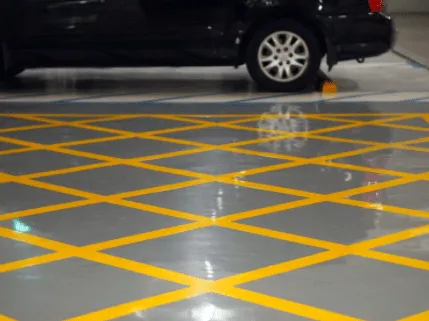
 Open larger photo: Gray floor with yellow hatched safety striping
 Open larger photo: Glossy gray floor in a warehouse with a mezzanine stair
 Open larger photo: Coated floor beneath stainless manufacturing equipment
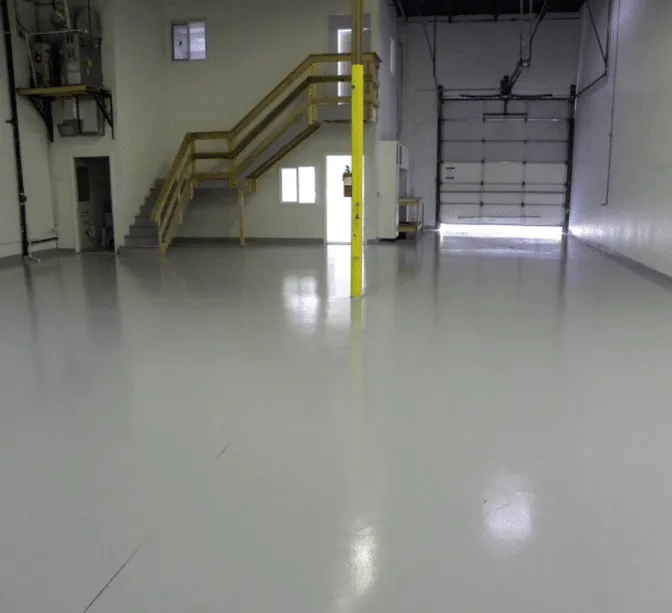
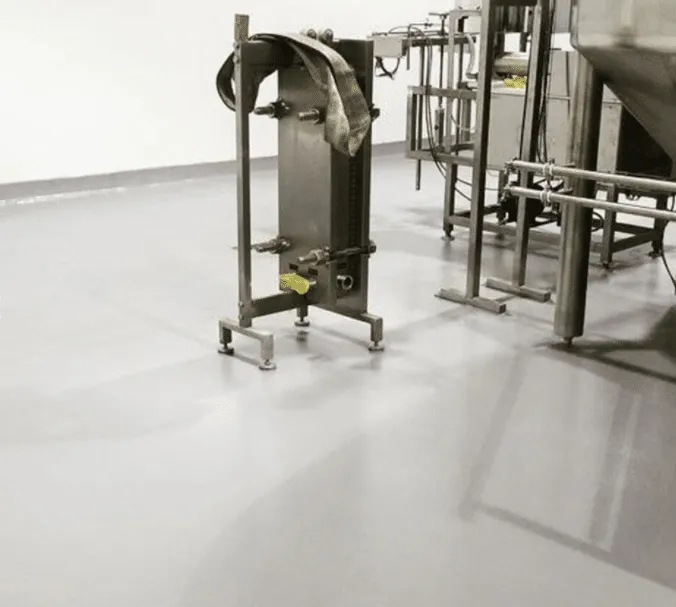
Photos from Concrete Polishing Solutions projects. Select a photo to view it larger.
View the photo galleryFAQ
Industrial flooring questions
Is polished concrete or epoxy better for an industrial floor?
It depends on the area. Polished concrete suits high-traffic aisles with forklifts and heavy equipment and avoids coatings that wear quickly there. Epoxy and urethane cement suit areas where chemicals, heat or wet processes reach the floor.
Can safety striping be added to an industrial floor?
Yes. Floors can include line striping and color coding to mark traffic lanes, equipment parking, storage areas and walkways.
Does moisture in the slab matter for an industrial floor?
Yes, for coatings. Moisture coming up through a slab can affect how a coating bonds and performs, so the slab is checked before a system is chosen, and moisture-resistant options are used where it is a concern.
How do we keep an industrial floor in good condition?
Sweep or dust-mop regularly, because grit acts like sandpaper on a finish, and clean up oils and chemicals promptly. Polished floors can be re-polished when they lose their shine, and coated floors can be recoated in worn areas. See the floor care guide.
Areas served
Serving homes and businesses across Southern California
- San Diego County
- Orange County
- Riverside County
- Los Angeles County
Free estimate
Ready to transform your concrete floor?
Share a few details about your space and the finish you have in mind, and we will help you choose the right system for your home or business.
- (619) 870-8308Call for a free estimate
- info@concretepolishingsolutions.proEmail us about your project
- Southern CaliforniaSan Diego, Orange, Riverside & Los Angeles counties