
Caulking & waterproofing
Control joint caulking in San Diego
Commercial control joint caulking and replacement, planned to protect the building exterior and done to the sealant manufacturer’s specifications.
Overview
Replacing control joints the right way
Commercial control joint caulking is maintenance that has to be planned to keep a building exterior protected. Replacing control joint caulking on commercial buildings is one of many tasks that keep the exterior in good shape.
How long control joints last depends on the sealant used, how much the joints move, how exposed they are and the building materials around them. In most cases we recommend removing old control joints and replacing them with silicone caulking, because silicone has a longer life expectancy than urethane and other advantages on commercial exteriors.
Remove, don’t skim
Some contractors skim-coat over old control joints to avoid cutting out the old caulk. Done without bond-breaker tape, this can make joints fail soon after they are installed, or crack the precast.
We prefer to remove the old joint completely and install new backer rod. That gives the new caulking the right proportions and as much elongation as possible, which usually means longer-lasting joints and lower caulking costs for the property owner.
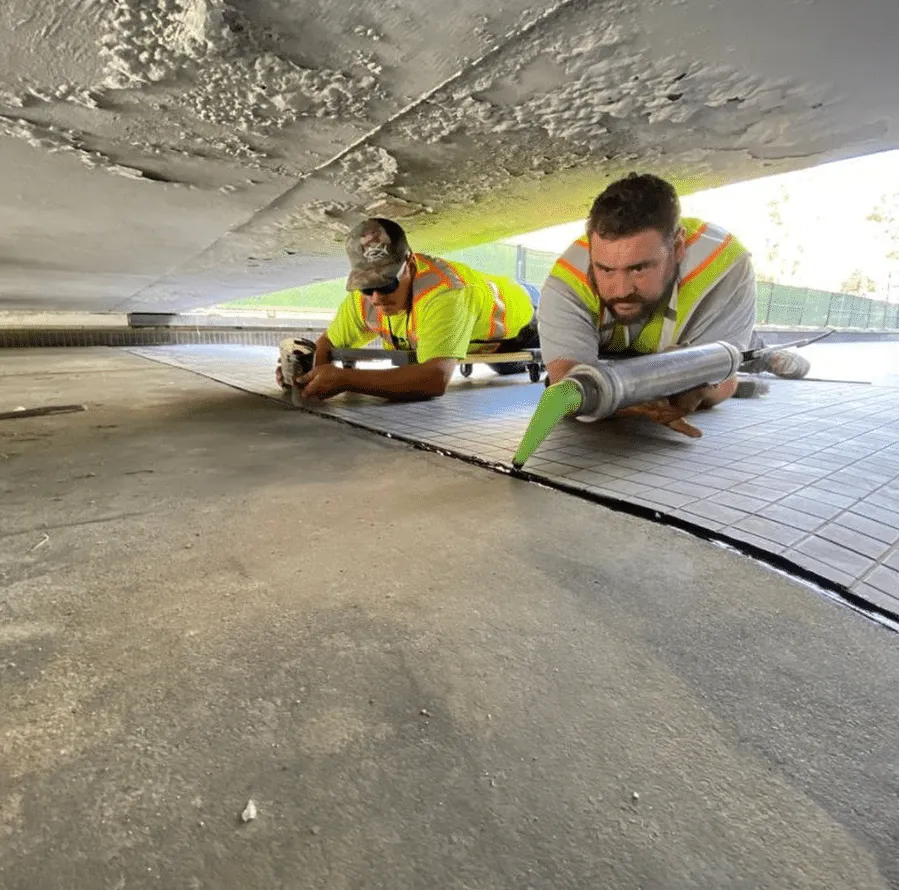
Every control joint we caulk is done according to the manufacturer’s specifications. Our crews are trained to reach hard-to-access areas and finish each joint properly.
Service at a glance
- Best for
- Protecting commercial building exteriors
- Our approach
- Remove the old joint completely and install new backer rod
- Usual sealant
- Silicone, for its longer life expectancy than urethane
- Service family
- Concrete Caulking/Waterproofing
The joint itself
What a control joint is, and what the sealant does
A control joint is a planned line in concrete or precast where cracking caused by shrinkage and temperature movement is encouraged to happen. The sealant in it does not stop the concrete from cracking; it closes the joint so it can move while helping to keep water and debris out.
Why concrete has control joints
Concrete shrinks as it cures and moves as temperatures change. Instead of letting cracks form at random, control joints give that movement a planned, straight line to follow, between wall sections, panels or slab sections.
A control joint does not make concrete crack-proof. It manages where cracking is most likely to occur.
What the sealant is for
On a building exterior, the open joint is sealed so water, dirt and insects cannot get into it, while the sealant stretches and compresses as the joint moves. Backer rod or bond-breaker tape lets the sealant flex between the two sides of the joint instead of being pulled apart.
Sealing a control joint is maintenance of the joint, not a structural repair.
Our approach
How we replace control joint caulking
- 01
Cut out the old caulk
Old sealant is removed completely instead of being skim-coated.
- 02
Install new backer rod
Backer rod sets the right joint proportions so the sealant can stretch as designed.
- 03
Seal with silicone
In most cases we use silicone for its longer life expectancy, following the manufacturer’s specifications.
Control or expansion?
Control joints and expansion joints compared
Both are planned joints that are sealed, but they do different jobs. A control joint guides where shrinkage cracking happens; an expansion joint separates parts of a structure so they can move independently.
| Control joint | Expansion joint | |
|---|---|---|
| Purpose | Gives shrinkage and temperature cracking a planned line to follow | Separates sections of a structure so each can move as loads and temperatures change |
| Typical places | Building exteriors, precast panels and walls, concrete slabs | Parking decks, between building sections, commercial and industrial structures |
| What fills it | Sealant over backer rod or bond-breaker tape | Sealant or a pre-formed joint material, such as a rubber expansion joint |
| When it fails | Water and debris get into the joint; skim-coated joints can fail early or crack the precast | Movement is restricted, which can lead to structural damage, and water can reach the structure |
For movement joints on parking decks and between building sections, see expansion joint caulking.
When to look again
Signs a control joint may need resealing
Control joints are inspected as part of exterior maintenance. These signs suggest the sealant is no longer doing its job.
Cracked or split sealant
Sealant that has hardened, cracked or split along its length can no longer stretch with the joint.
Sealant pulling away
Sealant that has delaminated from one or both sides leaves a gap where water can get in.
Leaks near joints
Water staining or leaks inside near a wall joint can point to a failed joint; water testing helps confirm the source.
Skim-coated joints
Joints that were skim-coated over old caulk, without bond-breaker tape, may fail early and are usually cut out and redone.
Damaged joint edges
Chipped or broken edges are repaired before resealing, because sealant needs a sound edge to bond to.
Missing sealant
Gaps where sealant has fallen out leave the joint open to water, dirt and insects.
More services
Related caulking and waterproofing work
- Elastomeric coatings
- Expansion joints
- Wet glazing
- Roof flashing caulking
- Brick and concrete repair
FAQ
Control joint questions
What is the difference between a control joint and a crack?
A control joint is planned: it is placed so cracking from shrinkage and temperature movement follows a straight, intended line. A crack is unplanned damage. Cracks in concrete are a repair question, while control joints are sealed and maintained. See concrete repair.
Does caulking stop concrete from cracking?
No. Concrete still shrinks and moves. The control joint manages where cracking is likely to occur, and the sealant closes the joint so it can move while helping to keep water and debris out.
Why not caulk over the old joint?
Skim-coating over old caulk, especially without bond-breaker tape, can make the new joint fail soon after it is installed or crack the precast. Removing the old joint and installing new backer rod gives the new caulking the right proportions.
What sealant is used for control joints?
In most cases we use silicone, for its longer life expectancy than urethane, and every joint is done to the sealant manufacturer’s specifications.
Areas served
Serving homes and businesses across Southern California
- San Diego County
- Orange County
- Riverside County
- Los Angeles County
Free estimate
Ready to transform your concrete floor?
Share a few details about your space and the finish you have in mind, and we will help you choose the right system for your home or business.
- (619) 870-8308Call for a free estimate
- info@concretepolishingsolutions.proEmail us about your project
- Southern CaliforniaSan Diego, Orange, Riverside & Los Angeles counties