

Concrete polishing
Acid staining and stained concrete
Decorative stains that add lasting color to new or existing concrete, indoors and out: interior floors, patios, driveways, walkways and pool decks.

Stained concrete floors
Reliable staining and sealing for concrete
Concrete Polishing Solutions stains and seals concrete for homes and businesses. We prepare the surface first: once the concrete has been cleaned or ground, we apply the decorative stain, remove any residue and clean up. Staining can change the color of concrete in many ways.
Our team stains both indoor and outdoor surfaces, from interior floors to driveways, patios, walkways and pool decks, with a range of colors to make concrete look new.
Stained concrete
Stain adds rich, long-lasting color to old and new concrete. You can choose from a wide range of colors and patterns, and add stencils and saw cuts for more interest. Because the stain penetrates the surface, stained concrete has a depth that can resemble tile, ceramic or marble.
No two stained floors look exactly alike. The age, texture, porosity and composition of the concrete, and its surroundings, all affect the final color and finish, so each project is unique.
Service at a glance
- Best for
- Lasting color on new or existing concrete, indoors and out
- Finish
- Depth that can resemble tile, ceramic or marble; no two stained floors look alike
- Common uses
- Interior floors, patios, driveways, walkways and pool decks
- Service family
- Concrete Polishing
Stain options
Acid stain or water-based stain
Both types penetrate the concrete for long-lasting color. The right choice depends on the look you want.
Acid stain
Creates a random, semi-transparent and unique effect that depends on the minerals already in the slab. Even a single color produces a range of hues, often with a marbled look.
Acid stains react chemically with the concrete and come in earthy tones such as browns, tans, soft blue-greens and terra cotta.
Water-based stain
Gives a more uniform tone and a wider choice of colors, including standard colors such as black and white and some metallic shades.
A good choice when you want specific colors, or many different designs and patterns.
Color expectations
Why does acid-stain color vary from floor to floor?
Because acid stain reacts with the concrete itself, the slab shapes the result. The same stain can look different on two floors, and across one floor.
What affects the color
- The minerals already in the slab, which the acid stain reacts with
- The age, texture, porosity and composition of the concrete
- Patches and repairs, which can take the stain differently from the surrounding concrete
- Existing sealers or wax, which stop the stain from penetrating and must be removed first
- Whether the concrete has been resurfaced or sealed before
Setting expectations
Acid stain gives a varied, marbled look rather than one even color, and even a single color produces a range of hues. If you want a more uniform tone or a specific color, a water-based stain is the better fit.
Testing the stain on the slab helps show how that concrete will take it before the whole floor is stained.
Benefits
Benefits of stained concrete
Durable color
Stained concrete is strong and long-lasting, and it keeps its color for a long time.
Attractive finish
Adds richness and character indoors or out, and can make a plain slab look like a more expensive floor such as marble.
Customizable
Any combination of colors, patterns and graphics, finished the way you want it.
Handles moisture
Stained concrete does not rot or warp when it gets wet.
Easy to clean
A smooth surface means dust and dirt do not get trapped. Regular sweeping and damp mopping keep it clean.
Works on old and new concrete
Both acid and water-based stains can be used on existing and newly placed concrete.
Related finishes
Staining, sealing, polishing or an overlay?
Staining changes the color of the concrete. Sealing protects that color, polishing can be combined with it, and an overlay or coating is the better route when the surface itself is worn or damaged.
Staining and sealing
Stained concrete is usually sealed. The sealer helps protect it from water, dirt and stains and deepens the color. It is surface protection, not waterproofing, and some sealers need renewing more often than others.
See concrete sealing and the floor care guide.
Polishing, overlays and coatings
- Concrete can be stained as part of polishing, combining color with a polished sheen; see concrete polishing
- Staining suits concrete with color problems; worn, cracked or patchy surfaces may need an overlay or resurfacing instead
- A coating such as epoxy covers the concrete completely, while stain lets the character of the slab show through
Before staining
What to consider before staining
- 01
Professional assessment
An installer checks the condition of the concrete to decide whether it is ready for stain or needs repair first. Badly spalled areas may not be suitable.
- 02
Choose the color
We talk through the colors available for each type of stain, so you know what to expect from the finished floor.
- 03
Prepare the surface
Existing sealers or wax must be removed so the stain can penetrate. We clean the surface and use grinding or shot blasting when needed.
Tell us if the concrete has been resurfaced or sealed before. It affects how the stain takes.
Our work
Stained concrete projects
 Open larger photo: Concrete floor with dark staining in a masked room
 Open larger photo: Dark brown high-gloss floor in a masked room
 Open larger photo: Terracotta-colored tile-pattern floor at an entryway
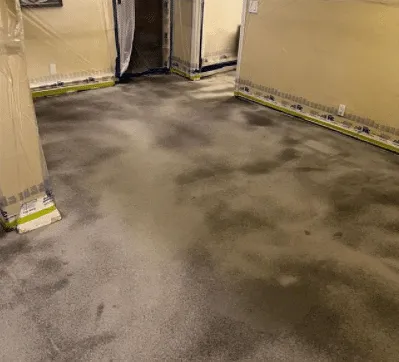
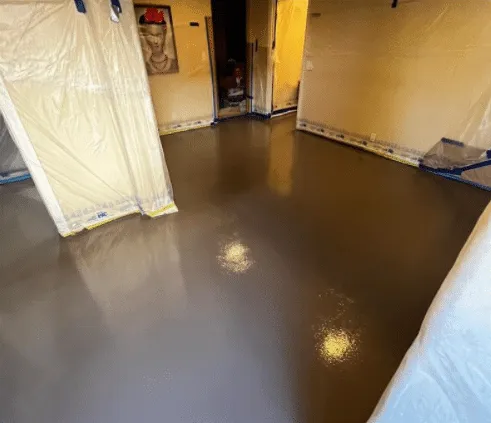
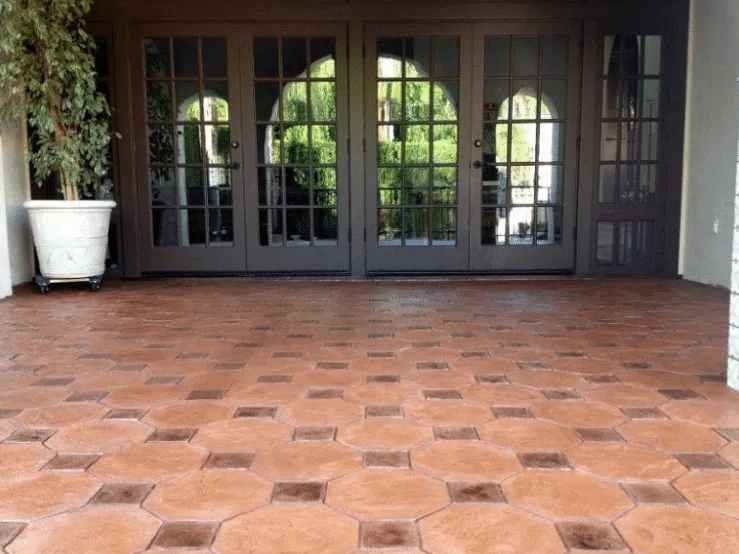
Photos from Concrete Polishing Solutions projects. Select a photo to view it larger.
View the photo galleryFAQ
Concrete staining questions
Will stained concrete fade?
Stains penetrate into the concrete, which is why their color lasts. When the concrete is properly prepared, the color will not chip or peel away.
Can you change the color of stained concrete?
Yes. With color theory and careful stain testing, stained concrete can be shifted to a different color, using complementary colors to neutralize tones you do not want.
Can stain be used on old concrete?
Yes. Acid and water-based stains can be used on both old and new concrete. Existing sealers or wax must be removed first so the stain can penetrate.
Related
Related services
- Concrete SealingProtects polished, stained and exterior concrete from water, dirt and stains.
- Concrete OverlayCovers imperfections and gives existing concrete a new look, for less than replacement.
- Concrete GrindingSmooths existing concrete floors so they can be polished to a high gloss.
- PatiosStained and coated outdoor patios.
Areas served
Serving homes and businesses across Southern California
- San Diego County
- Orange County
- Riverside County
- Los Angeles County
Free estimate
Ready to transform your concrete floor?
Share a few details about your space and the finish you have in mind, and we will help you choose the right system for your home or business.
- (619) 870-8308Call for a free estimate
- info@concretepolishingsolutions.proEmail us about your project
- Southern CaliforniaSan Diego, Orange, Riverside & Los Angeles counties