Concrete Polishing Solutions

Commercial & residential concrete flooring · San Diego, Orange, Riverside & Los Angeles counties info@concretepolishingsolutions.pro (619) 870-8308

Epoxy flooring

Epoxy flooring in San Diego

Seamless, easy-to-clean resin floors for garages, kitchens, warehouses, hospitals and more, in solid, chip, quartz and metallic finishes.
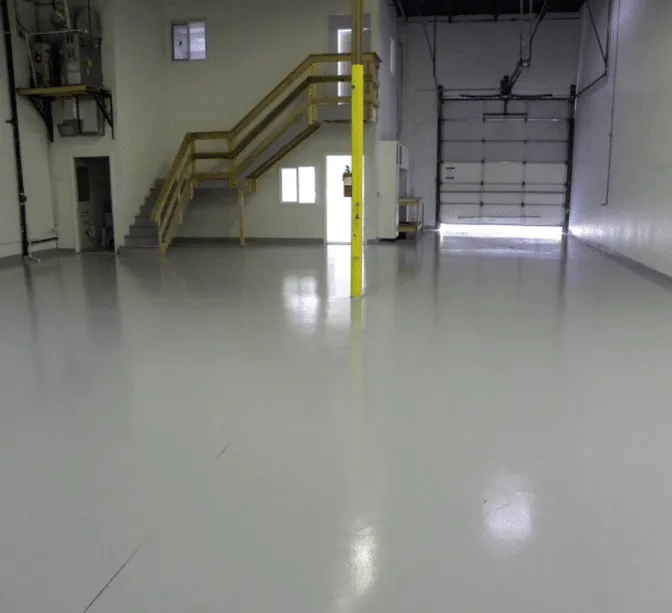
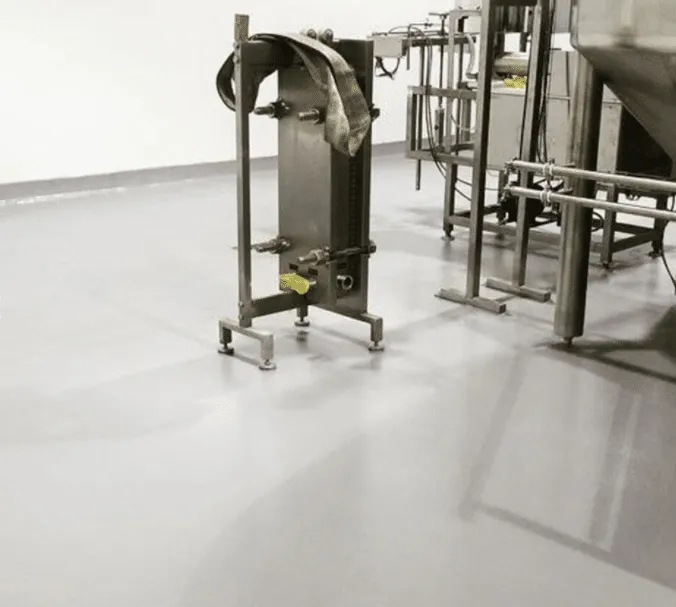
Glossy gray floor in a warehouse with a mezzanine stair
Epoxy-coated warehouse floor
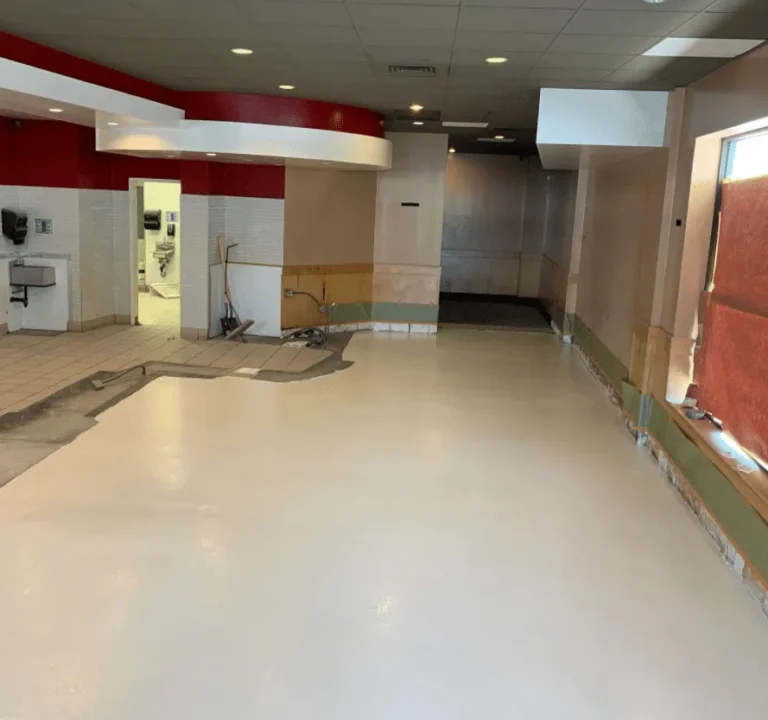
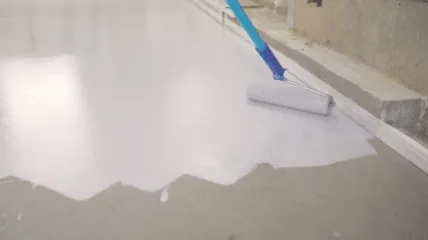
Epoxy coating being rolled onto a floor

Overview

Durable floors that are easy to clean

Epoxy floors have many benefits that make them useful, durable and easy to clean. Epoxy-based resin flooring has long been one of the most popular options because it comes in a wide range of colors and formulations.

Resin-based, seamless flooring is well suited to commercial spaces because it is durable and cost-effective. The main resin types are epoxy, polyurethane and methyl methacrylate (MMA).

Epoxy works well where floors see chemical spills and heavy wear, such as garages, workshops, locker rooms and kitchens, and on concrete pool decks and patios.

Why epoxy

Why choose epoxy floor coatings

  • Protects the concrete

    A hard coating that keeps moisture, dirt and other damaging materials from getting into the concrete.

  • Works on most concrete

    Can be applied to concrete, cinder block and most other concrete floors.

  • Less disruptive installation

    The installation process is not very intrusive compared with replacing a floor.

  • Decorative options

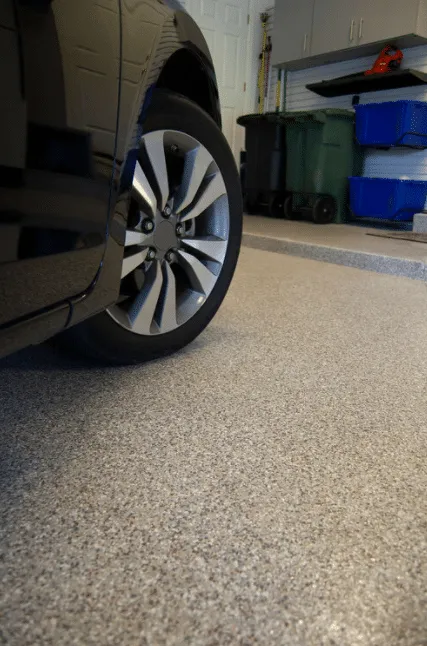
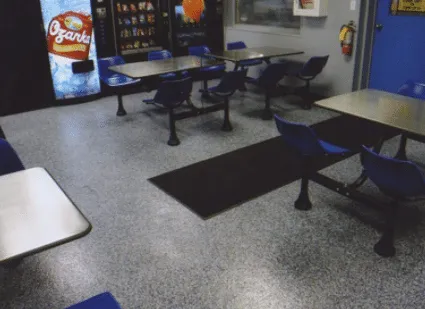
    Chip, solid color and metallic finishes. Vinyl chips or colored quartz can be broadcast into the base coat for a granite-like look.

  • Cost-effective protection

    Coating a concrete surface is a cost-effective way to protect it.

  • Easy to clean

    Handles traffic and cleans up easily, which suits kitchens, locker rooms, sports facilities, pools and patios.

Choosing a system

Which epoxy or resin system fits your space?

The seven systems differ mainly in look, texture and the conditions they are chosen for. The right one depends on the slab, how the space is used and the finish you want; each system page has the details.

Comparison of the seven epoxy and resin flooring systems
SystemLook and finishOften chosen for
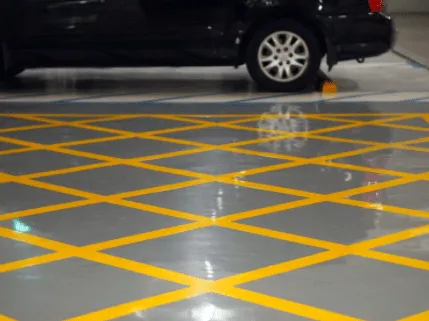
Solid epoxyOne color, high-gloss or textured with aggregateGarages and large interiors such as factories and warehouses, with striping or color coding where needed
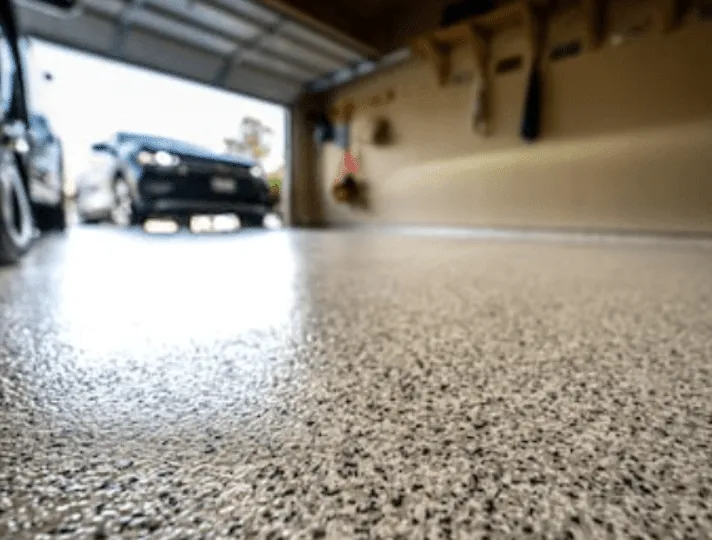
Epoxy chipA textured, terrazzo-like look from vinyl flakes; chip size, color and density can varyAreas with heavy foot traffic or light vehicle traffic, such as garages and workspaces
Epoxy quartzLayers of epoxy with colored quartz aggregate, in a textured finishWear and abrasion, indoors and on exterior walkways
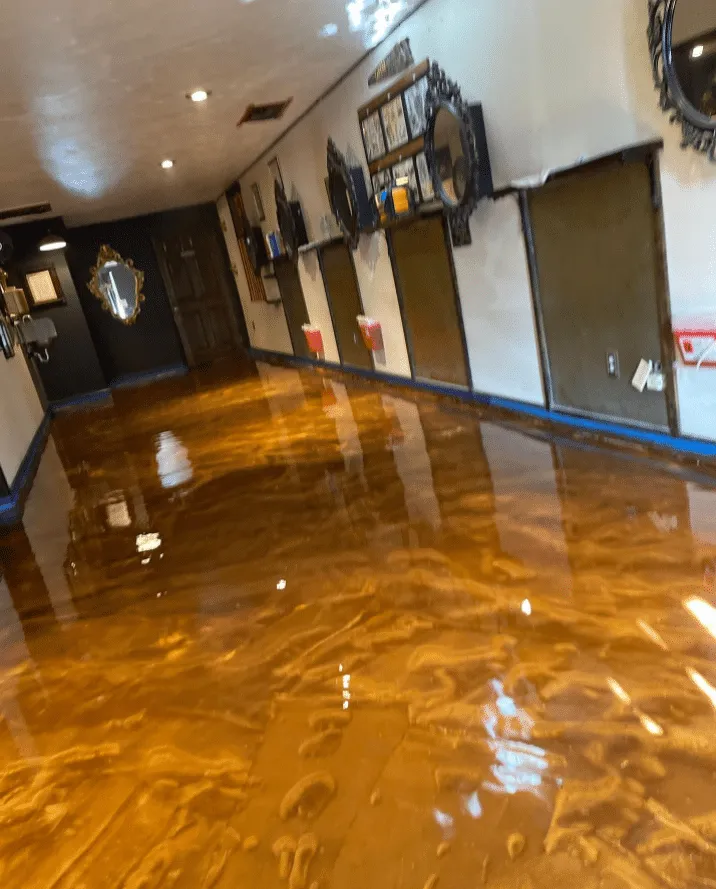
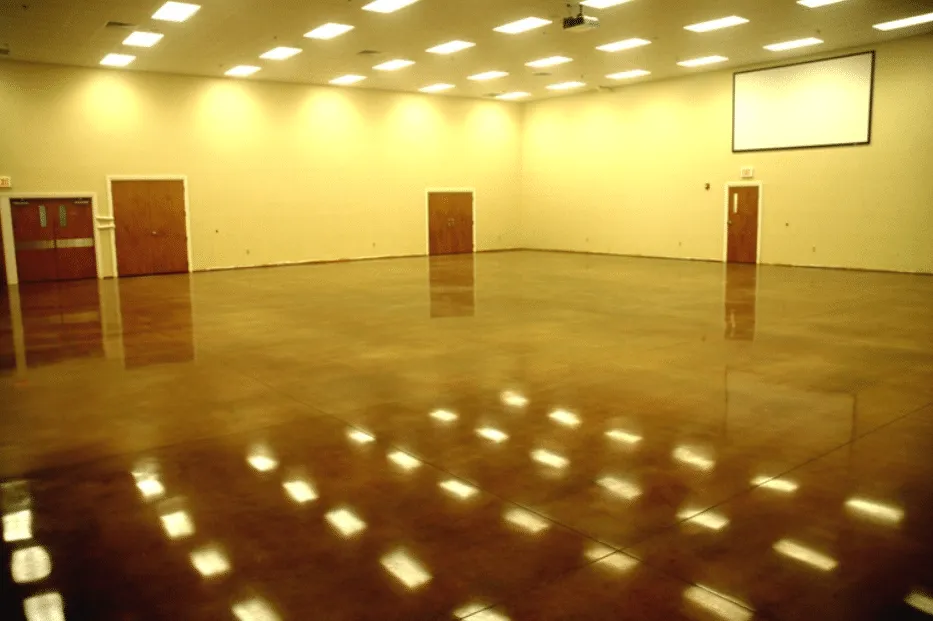
Metallic epoxyFlowing metallic color and movement; the pattern varies from floor to floorShowrooms, lobbies, restaurants and homes
Polyurea polyasparticOften paired with chip finishesGarages, showrooms and retail spaces where a faster installation than epoxy matters
Urethane cementA heavy-duty polyurethane-concrete mortarFood processing, commercial kitchens and other floors exposed to chemicals, abrasion and thermal shock
AcrylicA thinner protective layer, often compared with epoxyA quick-drying, lower-cost coating, including on stamped and decorative concrete

Home or business?

Epoxy systems at home and in commercial spaces

The same systems appear in both settings, but the decision usually starts in a different place: at home with the room and the look, in a business with traffic, spills and cleaning.

At home

  • Garages: epoxy, chip finishes or polyurea polyaspartic
  • Basements: epoxy and chip coatings for durable, easy-to-clean floors
  • Interior floors: metallic epoxy or other coatings where a coated look is wanted

See garage floors, basements and interior floors.

In commercial spaces

  • Production, warehouse and industrial floors: solid epoxy, epoxy quartz and urethane cement
  • Kitchens and food service: urethane cement and epoxy systems suited to heat, moisture and washing
  • Showrooms, lobbies and offices: metallic and solid epoxy, including logo designs

See commercial applications.

Where it works

Where epoxy floors are installed

The right system and thickness depend on how the space is used.

  • Garages

    Epoxy-based floors resist mechanical shock, chemicals such as detergents, salts and antifreeze, and oil and fuel, and they are simple to clean.

  • Basements

    Strong, durable basement floors that are easy to keep clean.

  • Warehouses

    Warehouse floors are some of the busiest in a facility. Epoxy coatings help them handle heavy loads.

  • Hospitals and clinics

    Epoxy forms a seamless, continuous surface that is easy to clean and practical to maintain.

  • Restaurants and food service

    Self-leveling polymer floors, polyurethane and epoxy, chosen to suit the kitchen and dining areas.

  • Schools, offices and hotels

    Chosen for traffic and cleaning needs. Office and hotel floors can include a company logo.

How it works

How an epoxy floor is installed

Good preparation avoids surprises. Every floor is examined before work begins.

  1. 01

    Inspect the slab

    Supervisors examine the existing surface, checking for cracks, moisture, leaks, holes, patches, expansion joints, flatness and slope.

  2. 02

    Prepare the surface

    The concrete is prepared by mechanical or chemical means so the coating can bond.

  3. 03

    Prime and build the base

    A primer or base layer is applied to cover small defects and seal pores. Sand, flakes or quartz can be broadcast into it.

  4. 04

    Apply the finish

    Finishing layers are mixed and applied, and a spiked roller removes air bubbles for a smooth, seamless surface.

Cure and return-to-service times depend on the product, the system and site conditions. We give you a schedule for your project with your estimate.

FAQ

Epoxy flooring questions

Can an epoxy coating be applied over an existing concrete floor?

Yes, if the concrete has not been sealed. If the floor has been sealed, an epoxy coating will not bond and will not work as well as it should.

Why use epoxy flooring?

Epoxy creates a surface that is easy to clean and keep clean. It keeps water, grease and oil from getting in, and dirt and dust clean up quickly.

What types of epoxy are used for floors?

There are three types of epoxy floor coating: 100% solids, water-based and solvent-based. 100% solids epoxy is a durable option and is the type professionals use and recommend.

Are epoxy floors slippery?

A skid-resistant additive can be added to the topcoat to improve traction, including where the floor may get wet.

How do I clean an epoxy floor?

Sweep or dust-mop regularly, then clean with a diluted, neutral cleaner. Avoid soap, which leaves a film, and avoid citrus cleaners and vinegar, which can dull the finish over time. See our maintenance guide.

Areas served

Serving homes and businesses across Southern California

  • San Diego County
  • Orange County
  • Riverside County
  • Los Angeles County

Free estimate

Ready to transform your concrete floor?

Share a few details about your space and the finish you have in mind, and we will help you choose the right system for your home or business.

Free estimate

Request your free estimate

Prefer to talk? Call (619) 870-8308

This field is for validation purposes and should be left unchanged.
Name(Required)
Call (619) 870-8308Call Now (619) 870-8308Get a Free EstimateFree Estimate