
Residential applications
Garage floor coatings
Epoxy and polyurea polyaspartic garage floors that are easy to clean and protect against stains, chemicals, grease and wear.
Overview
A better-looking, harder-working garage
The garage is one of the most used spaces in a home. Epoxy, polyaspartic or bare concrete floors can improve its durability and usefulness, and we install all three.
Epoxy-based floors resist mechanical stress, chemicals such as detergents, salts and antifreeze, and oil and fuel, and they are simple to clean. Water and debris stay on the surface, ready to be swept or wiped away.
Chip finishes, colors and textures let you match the floor to your style and your home.
Application at a glance
- Floor options
- Epoxy, polyurea polyaspartic or bare concrete
- Resists
- Detergents, salts, antifreeze, oil and fuel
- Design options
- Chip finishes, colors and textures to match your home
Start with the garage
How do you use your garage?
A good starting point is how the garage is used day to day. Parking, a workshop or a home gym each put different demands on the floor.
Parking and storage
Tires, road dirt and the occasional drip of oil or fluid. A coating keeps those on the surface, where they can be wiped up.
Workshop or hobby space
Dropped tools, spills and cleaning products. A hard, easy-to-clean coating suits a working garage.
A space you want to show off
Chip finishes, colors and textures let the floor match the rest of your home.
Coating options
Epoxy or polyurea polyaspartic?
Both are resinous coatings that are simple to clean and protect against stains, chemicals, grease and wear.
| Epoxy | Polyurea polyaspartic | |
|---|---|---|
| Strengths | Comes in a wide range of thicknesses; strong adhesion makes it a good choice for refinishing concrete; impact resistance at the right thickness. | Impact absorption, abrasion resistance, chemical resistance and UV stability. |
| Installation | Takes longer than polyaspartic. | Installs faster than epoxy. |
| Cost | Generally lower. | Generally higher. |
Choosing a floor
Which garage floor fits your priorities?
Most homeowners choose between a flake (chip) coating, a solid-color coating and bare or polished concrete. Your priorities decide which one fits.
| If your priority is | Consider | Why |
|---|---|---|
| Keeping cost down | An epoxy coating | Epoxy generally costs less than polyaspartic |
| Getting the garage back quickly | A polyaspartic coating | It installs faster than epoxy; timing depends on the product and site conditions |
| A decorative look that hides small flaws | A chip (flake) finish | Multicolored flakes add pattern and help hide imperfections in the slab |
| A clean, single color | A solid-color epoxy | A smooth color that suits workshops and storage |
| Sun at the garage door | A polyaspartic coating | UV stability is one of its strengths, while epoxy can turn yellow in sunlight |
| Keeping the concrete look | Bare or polished concrete | No coating; polishing can restore an existing slab |
Each system has its own page with the details: epoxy chip, solid epoxy and polyurea polyaspartic.
Before coating
Can your existing garage slab be coated?
Usually, yes, but the slab is checked first. What is on it now, its cracks and stains, and any moisture all decide how it is prepared.
What is checked
- Old paint, overlays or coatings, which are removed before a new coating goes down
- Whether the concrete has been sealed, because epoxy will not bond to sealed concrete
- Cracks, pits and chipped areas that need repair
- Oil stains and other contamination
- Moisture in the slab
Repairs and preparation
Cracks and damaged areas are repaired, contamination is cleaned off or ground away, and the surface is prepared so the coating can bond. How much preparation is needed depends on the condition of the slab and the coating chosen.
See concrete repair.
How it works
How a garage coating is installed
- 01
Prepare the surface
The floor is cleaned, existing overlays are removed and the surface is lightly ground so the coating can bond.
- 02
Apply the base coat
The first coat is poured and spread evenly over the floor with a roller.
- 03
Broadcast chips
For a chip floor, multicolored chips or quartz aggregate are added to the base coat.
- 04
Topcoat
A topcoat is applied to hold the chips in place.
Our work
Garage floors we have coated
 Open larger photo: Close-up of a flake-finish garage floor
 Open larger photo: Car tire on a flake-finish garage floor
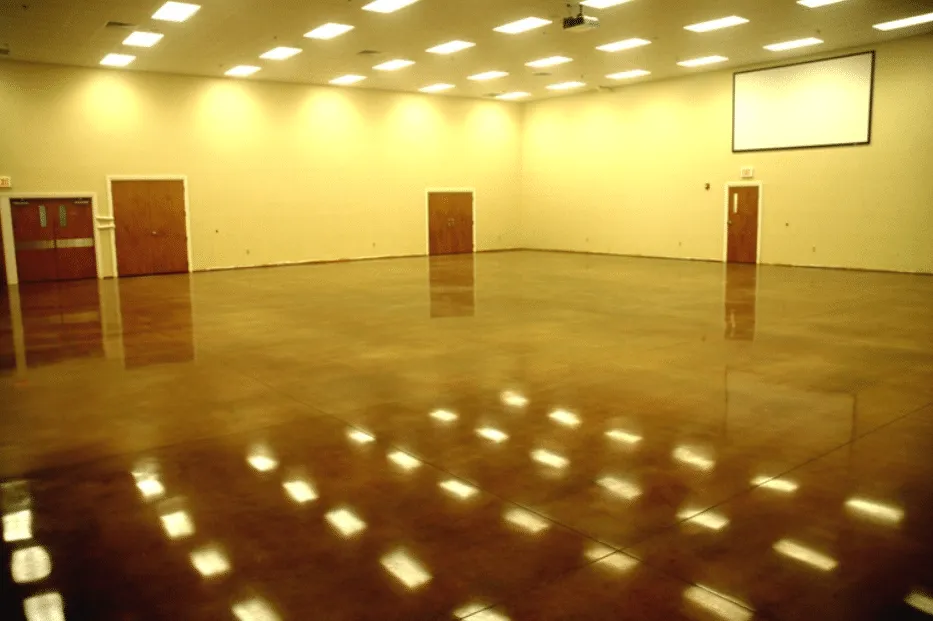
 Open larger photo: Flake-finish floor in an empty room
 Open larger photo: Collage of a flake-finish floor in a finished interior
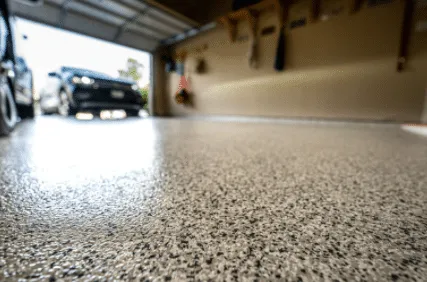
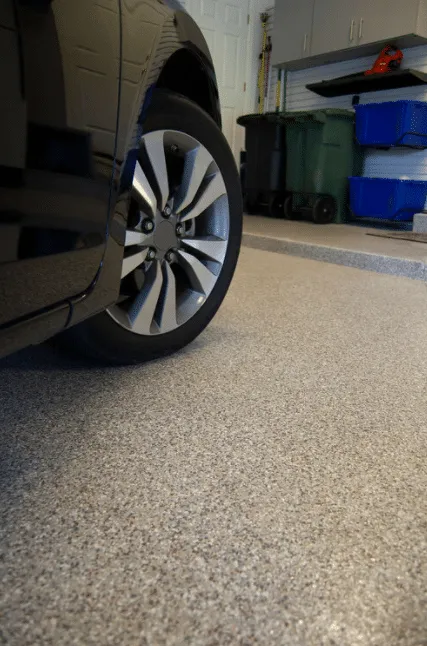
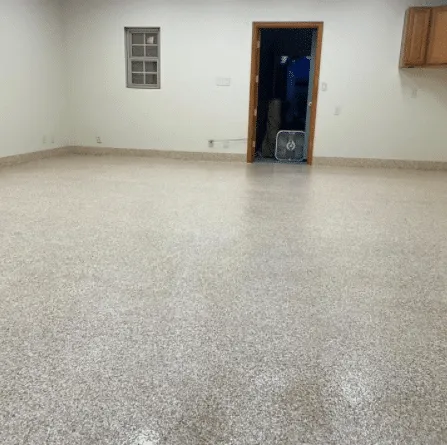
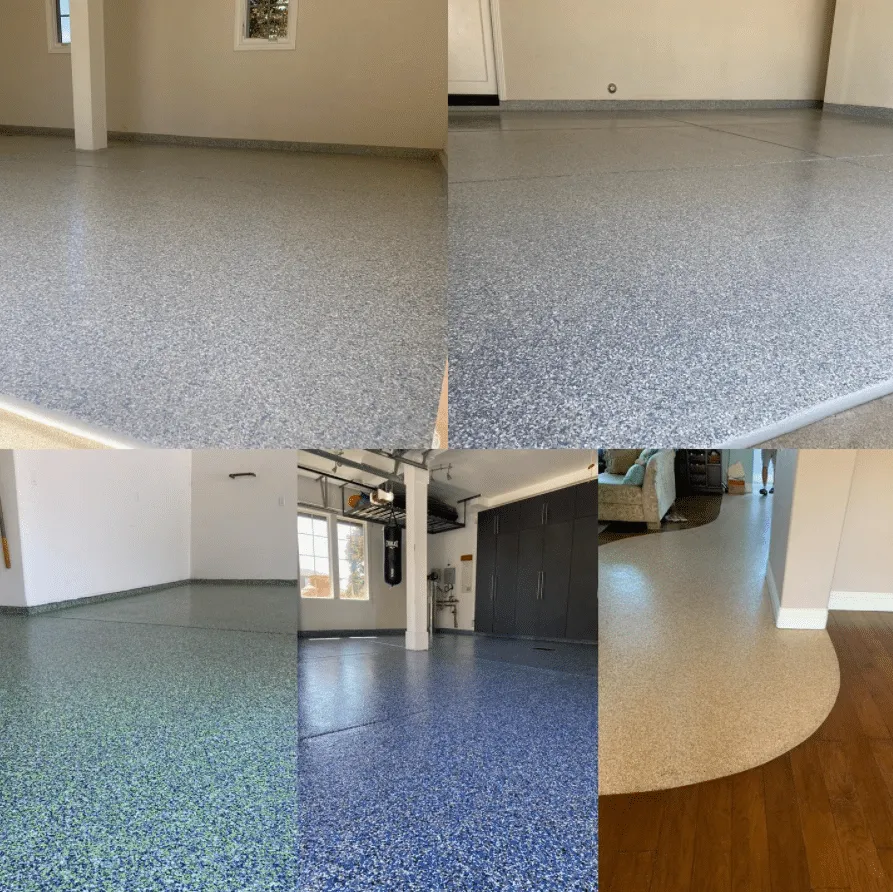
Photos from Concrete Polishing Solutions projects. Select a photo to view it larger.
View the photo galleryFAQ
Garage floor questions
Can a new coating go over old garage floor paint?
Old paint, coatings and overlays are removed first so the new coating bonds to the concrete itself. A sealed floor also needs preparation, because epoxy will not bond to sealed concrete.
Will oil stains show through a garage coating?
Oil and other contamination are cleaned off or ground away during preparation so the coating can bond. A chip finish also helps hide small imperfections in the slab.
How do I clean a coated garage floor?
Sweep regularly and clean with a diluted, neutral cleaner. Pressure washing is not needed; a very dirty floor can be hosed down. Wipe up oil and fluids promptly. See the floor care guide.
Is polished concrete an option for a garage?
Yes. Bare or polished concrete is one of the three garage options we install. Polishing grinds and refines the existing slab, so there is no coating to wear or recoat.
Related
Related services and applications
Concrete Polishing Solutions installs epoxy, epoxy chip and polyurea polyaspartic garage coatings, all part of our epoxy flooring services. Polyaspartic installs faster, while epoxy generally costs less.
- Epoxy Chip FlooringLayered epoxy with vinyl flakes.
- Polyurea PolyasparticA floor coating that installs faster than epoxy.
- DrivewaysDriveway repair, resurfacing, staining and sealing.
- BasementsEpoxy, polished concrete and underlayment options for basement floors.
- Parking StructuresCoatings for decks, ramps and garages exposed to traffic and moisture.
Areas served
Serving homes and businesses across Southern California
- San Diego County
- Orange County
- Riverside County
- Los Angeles County
Free estimate
Ready to transform your concrete floor?
Share a few details about your space and the finish you have in mind, and we will help you choose the right system for your home or business.
- (619) 870-8308Call for a free estimate
- info@concretepolishingsolutions.proEmail us about your project
- Southern CaliforniaSan Diego, Orange, Riverside & Los Angeles counties