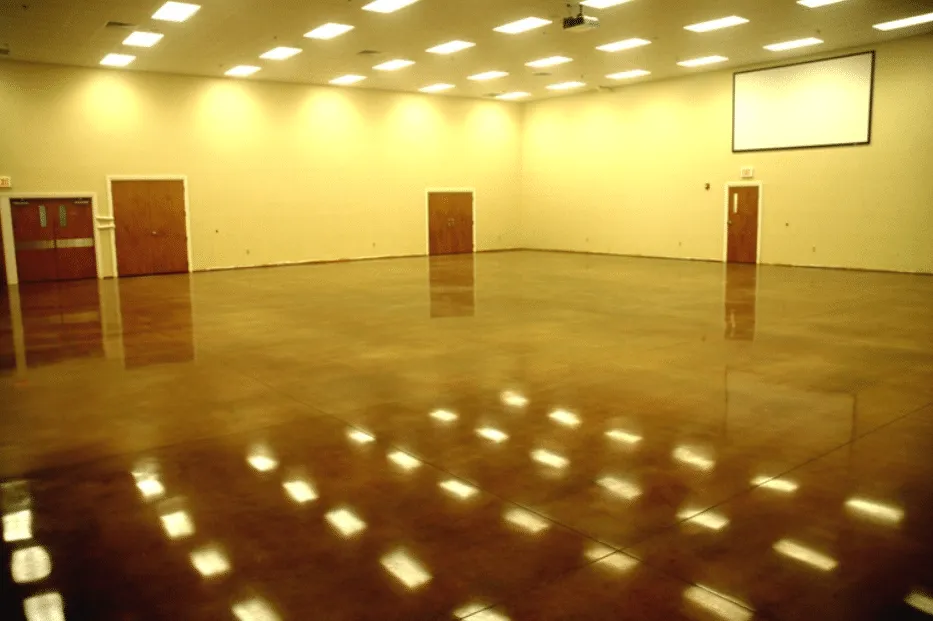
Concrete polishing
Self-leveling concrete in San Diego
A self-spreading, concrete-like material used as an underlayment for other flooring or as a finished floor in its own right.
Self-leveling at a glance
- Underlayment for tile, vinyl and carpet
- Can serve as a finished interior floor
- Smooths uneven or low spots
- Avoids tearing out sound concrete
What it is
Concrete that spreads and levels itself
Self-leveling concrete looks and works much like traditional concrete, but it flows more easily and sets up faster. Once mixed with water it is pumped or poured, spread with a gauge rake and then evens itself out.
It contains polymers that help bind it together, so it does not need as much water as traditional concrete to stay fluid. It is more expensive gallon-for-gallon, but it can save tearing down or replacing old concrete: a thin layer can fix and improve the surface right away.
Service at a glance
- What it is
- A concrete-like material that flows easily, sets up faster and evens itself out
- Used as
- An underlayment for other flooring, or a finished floor in its own right
- Good to know
- A thin layer can fix the surface without tearing out old concrete
- Service family
- Concrete Polishing
Related services
Self-leveling, overlay or repair?
Self-leveling is mainly used to create a smooth, even surface: a base for another floor, or a finished floor of its own. An overlay adds a new decorative surface, and repair fixes specific defects.
Self-leveling
Evens out low spots and uneven areas indoors, as an underlayment for tile, vinyl or carpet, or as a finished floor with color added.
Concrete overlay
Adds a new decorative layer, such as a stamped or textured surface, to sound concrete. A self-leveling overlay is one type. See the overlay comparison.
Concrete repair
Fixes specific cracks, holes and damaged areas. Self-leveling can help where cracks, pits and splits are too much for patching compounds. See concrete repair.
When to use it
Where self-leveling works, and where it does not
Good uses
- As an underlayment for tile, vinyl and carpet.
- Fixing cracks, pits and splits that patching compounds cannot handle.
- Smoothing uneven or low spots that are not bad enough to replace the slab.
- As a finished floor, with color additives to match your decor.
- Saving a floor that would otherwise have to be torn out.
Poor uses
- Most exterior surfaces. It is mainly for indoor floors, with a few covered exceptions such as a carport or garage.
- Surfaces that are not suitably prepared.
- Areas with heavy machinery or harsh chemicals. It is durable, but not as strong as traditional concrete in very rough conditions.
Before pouring
What is checked first, and what self-leveling cannot fix
Self-leveling evens out the surface; it does not correct the structure underneath. The existing slab is evaluated before it is used.
What is checked first
- Cracks and damaged areas, and what caused them
- Old floor coverings, adhesive or coatings, which are removed
- Contamination on the surface
- Whether the surface can be suitably prepared, since self-leveling will not set well on a poorly prepared floor
What it cannot fix
- Settlement, foundation problems or other structural issues; cracks from movement should be evaluated before any surface work is planned
- Floors that will face heavy machinery or harsh chemicals
- Most exterior surfaces
Hiring the right professional
Why professional installation matters
Concrete repair takes training and experience. The floor and the structure under it must be safe and sound, and an inexperienced repair can make a small problem worse or hide structural issues. Self-leveling products also have a limited working time and must be mixed with the correct amount of water.
A professional can often solve the problem with targeted repairs instead of a whole new surface, keeping old concrete safe and functional without replacing the slab.
FAQ
Self-leveling questions
Can self-leveling fix a cracked slab?
It can fix cracks, pits and splits that patching compounds cannot handle, and smooth the surface around them. It does not fix the cause: cracks from settlement or other movement should be evaluated before any surface work is planned.
Is self-leveling the same as an overlay?
Not quite. A self-leveling overlay is one type of overlay, used to give an interior floor a smooth new surface or a base for other flooring. Decorative overlays, such as stamped or textured ones, are chosen for their look. See concrete overlay.
Can self-leveling be the finished floor?
Yes. Self-leveling can serve as a finished interior floor, and color additives can be used to match your decor.
Can self-leveling be used outside?
Mostly not. It is mainly for indoor floors, with a few covered exceptions such as a carport or garage.
Related
Related services
- Concrete OverlayCovers imperfections and gives existing concrete a new look, for less than replacement.
- Concrete RepairRepairs for interior floors and exterior areas such as pool decks, patios and driveways.
- Concrete GrindingSmooths existing concrete floors so they can be polished to a high gloss.
- Interior FloorsFloors for living spaces at home.
Areas served
Serving homes and businesses across Southern California
- San Diego County
- Orange County
- Riverside County
- Los Angeles County
Free estimate
Ready to transform your concrete floor?
Share a few details about your space and the finish you have in mind, and we will help you choose the right system for your home or business.
- (619) 870-8308Call for a free estimate
- info@concretepolishingsolutions.proEmail us about your project
- Southern CaliforniaSan Diego, Orange, Riverside & Los Angeles counties